
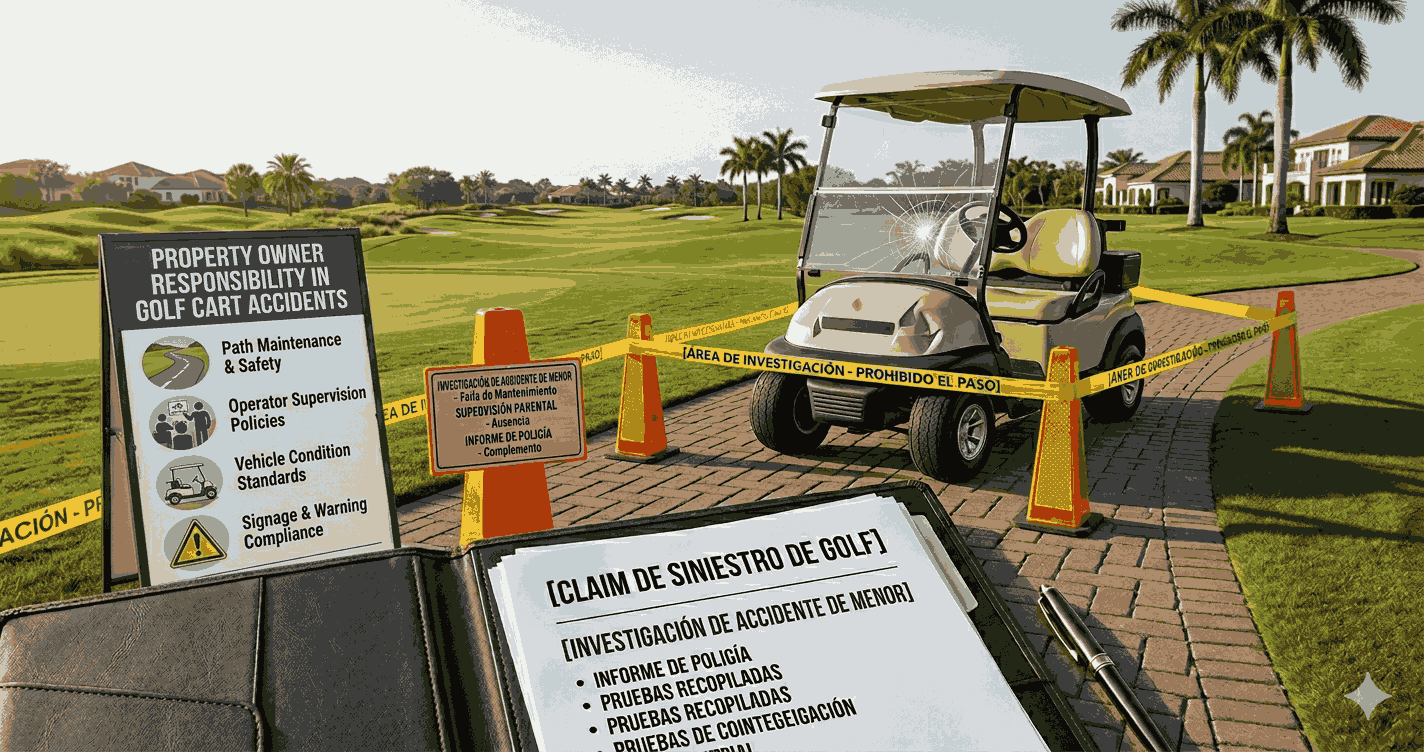
When we discuss motor vehicle accidents, the conversation almost always revolves around driver error, insurance policies, and traffic laws. However, when a golf cart accident occurs on a private estate, a commercial golf course, a gated neighborhood, or a vacation resort, a completely different area of law comes into play: premises liability.
Under premises liability law, property owners have a strict legal obligation to maintain a safe environment for their guests, visitors, and customers. If a dangerous condition on the land or a poorly managed fleet of vehicles causes a crash, the property owner can be held financially responsible for the resulting medical bills, lost wages, and pain and suffering.
Whether you are a landowner, a resort manager, or someone who has been injured on commercial property, here is what you need to know about property owner responsibility in a golf cart accident.
The Legal Duty of Care: Proving Property Owner Negligence
To understand property owner responsibility, you must first look at the legal relationship between the landowner and the person injured. In personal injury law, visitors are generally classified into three categories, each commanding a different level of protection:
-
Business Invitees (Highest Protection): This includes paying guests at a resort, golfers who purchased green fees, or customers at a commercial venue. Owners owe invitees a rigorous duty to inspect the property, repair hazards immediately, and warn of hidden dangers.
-
Licensees (Moderate Protection): Social guests visiting a private home or residential property. The homeowner must warn licensees of known, hidden dangers that the guest wouldn’t reasonably notice on their own.
-
Trespassers (Lowest Protection): Individuals on the land without permission. While owners cannot intentionally set traps for trespassers, they generally do not owe them a duty of maintenance.
To successfully pursue a claim against a property owner after a golf cart crash, your legal team must prove that an unsafe condition existed, the owner knew (or should have known) about it, and their failure to fix or warn you about that hazard directly caused your injury.
4 Ways Property Owners Face Liability for Cart Accidents
Property owner negligence in golf cart cases typically stems from infrastructure failures, poor management, or mechanical neglect.
1. Negligent Maintenance of Paths and Infrastructure
Property owners must ensure that the pathways designed for golf cart traffic are free from structural and environmental hazards. Because golf carts lack advanced suspension and stability control systems, minor path defects can cause catastrophic rollovers. Landowners can be held liable for crashes caused by:
-
Severe Cracking and Potholes: Unrepaired asphalt craters or massive tree roots breaking through pavement that catch a cart’s tire and flip the vehicle.
-
Lack of Guardrails or Barriers: Failing to install protective barriers along paths directly adjacent to steep drop-offs, cliffs, or deep water hazards.
-
Structural Failures: Rotting or unreinforced timbers on small bridges spanning creeks or ravines that collapse under the weight of a loaded cart.
2. Failure to Post Adequate Safety Signage
Property owners are responsible for mapping out safe traffic flows on their land. If a piece of geography features an unusual or extreme hazard, highly visible warning signs must be posted. Failure to warn drivers can result in liability if an accident happens due to a lack of signage before:
-
Blind intersections where pedestrian walkways cross fast-moving cart paths.
-
Extremely steep or winding downhill slopes that require immediate braking.
-
Sudden, sharp hidden curves obscured by overgrown landscaping.
[Hazardous Terrain Feature] ──> [No Warning Signs Posted] ──> [Driver Blindsided by Hazard] ──> [Property Owner Held Accountable]
3. Negligent Rental Fleet Maintenance
If the property owner or resort provides, leases, or rents the golf cart to the visitor, the vehicle itself is legally treated as an extension of the premises. Because rental fleets face heavy, back-to-back daily usage, owners must implement strict, documented maintenance schedules. A landowner faces massive exposure if an accident is caused by:
-
Neglected Brake Systems: Worn pads or leaking hydraulic fluid that causes complete brake failure on a hill.
-
Bald Tires: Tires completely stripped of tread, causing the vehicle to spin out or hydroplane on wet grass or slick concrete pool decks.
-
Loose Steering Column linkages: Unrepaired steering slack that prevents an operator from successfully avoiding an obstacle.
4. Failure to Enforce Basic Safety Regulations
Commercial property owners can be held responsible if they actively permit dangerous behaviors on their land. For instance, if a resort rental company routinely allows underage, unlicensed children to drive high-powered utility carts, or knowingly permits groups to severely overload a vehicle past its manufacturer-designated seating capacity, their failure to enforce their own safety rules constitutes corporate neglect.
Overcoming Liability Waivers and “Inherent Risk” Defenses
If you attempt to file an injury claim against a golf course or resort, their insurance company will likely point to the fine print on your rental agreement, scorecard, or entry ticket. They will argue that you signed a liability waiver or assumed the “inherent risks” of the activity.
However, a waiver is not an automatic blank check for a business to act recklessly.
While getting struck by an errant golf ball is widely considered an inherent risk of being on a golf course, driving over a hidden, rotting wooden bridge that collapses into a creek bed is not. A liability waiver cannot legally protect a property owner from gross negligence—meaning if management knew an infrastructure hazard existed and deliberately chose to ignore it, the waiver will typically be invalidated by a court of law.
Action Steps to Take After a Property-Based Cart Accident
If you are involved in a golf cart accident caused by a hazardous condition on someone else’s land, you must secure physical evidence immediately before the property owner has an opportunity to alter the scene.
1.Take Immediate Photos and Videos:Document the Hazard.
The Role of Comparative Negligence
Keep in mind that insurance adjusters will evaluate whether your own actions contributed to the accident under the rule of comparative negligence. If a court finds that the property owner was 70% responsible for a poorly maintained path, but you were 30% responsible because you were driving while distracted or speeding, your final financial compensation will be reduced by 30%. Always drive carefully and obey posted rules to protect both your physical safety and your legal rights.
Have you ever encountered dangerous potholes, crumbling paths, or unmaintained rental carts while visiting a resort or golf course? How did the property management address it? Let us know in the comments below, and share this article on social media to keep your friends and family safe on their next trip!
References
-
Restatement (Third) of Torts: Liability for Physical and Emotional Harm (2024). General duty of care metrics, inspection mandates, and liability criteria for landowners to business invitees.
-
Journal of Legal Aspects of Sport (2023). Enforceability limitations of liability waivers involving gross negligence and recreational vehicle asset maintenance.
-
National Safety Council: Low-Speed Vehicle Safety Standards (2025). Safe infrastructure layout guidelines and fleet inspection compliance metrics for commercial properties.
