

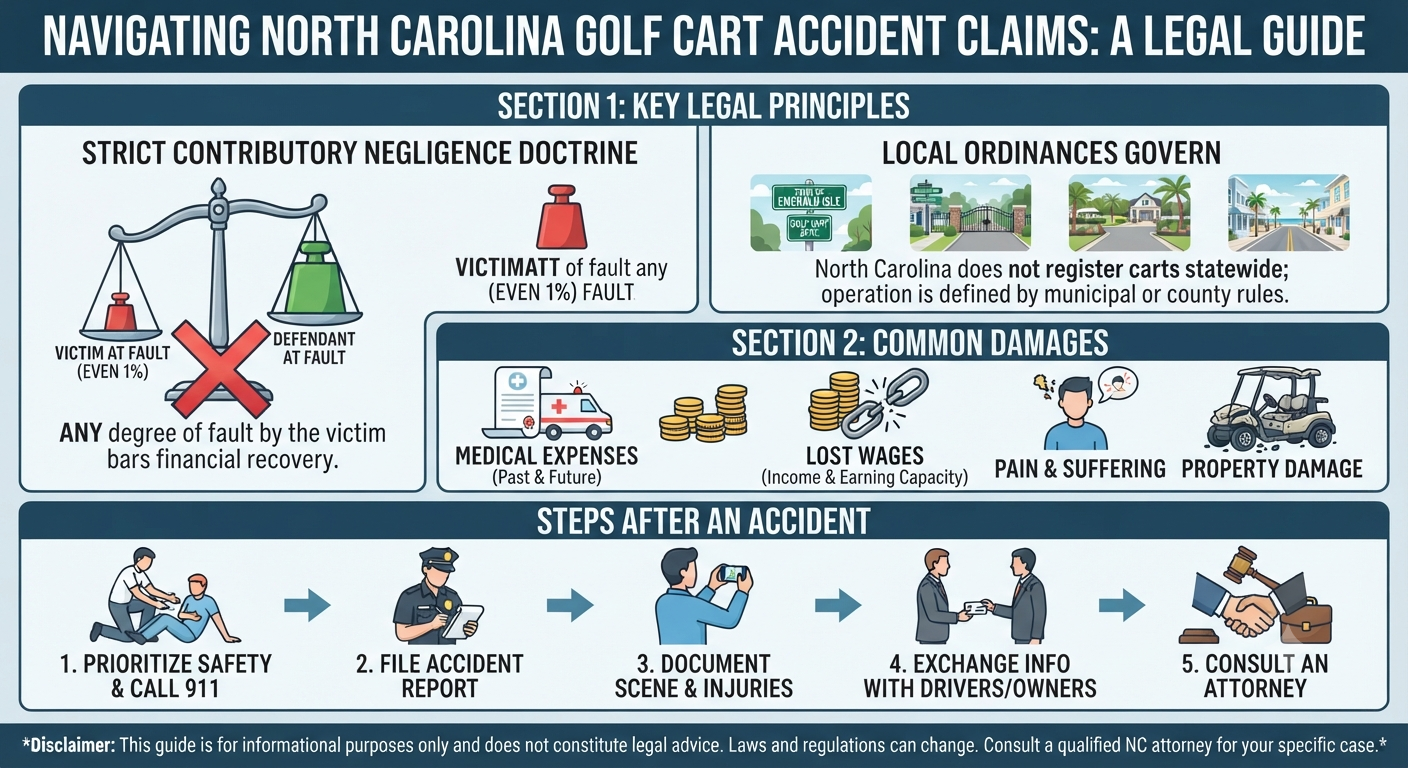
Golf carts are a increasingly popular way to travel in North Carolina’s retirement communities, coastal towns, and master-planned developments. However, their lack of structural protection makes them highly susceptible to rollovers and severe injuries. If you are involved in a collision, understanding North Carolina’s unique and strict legal environment is essential to protecting your rights.
1. The Challenge of “Contributory Negligence”
The most critical factor in any North Carolina personal injury claim is the state’s adherence to the doctrine of pure contributory negligence.
-
The 1% Rule: Unlike most states that use comparative negligence, North Carolina law bars plaintiffs from recovering any damages if they are found to be even 1% at fault for the accident.
-
Impact on Claims: Because even a minor error on your part can lead to a complete denial of compensation, insurance companies often aggressively investigate your actions to shift blame.
-
Mitigation: The “last clear chance” doctrine is a narrow exception that may allow recovery if you can prove the defendant had the final opportunity to avoid the accident but failed to do so.
2. Legal Requirements for Golf Carts
Golf carts are not automatically street-legal in North Carolina; their operation on public roads depends on local municipal or county ordinances. If local laws permit their use, operators must generally comply with the following:
-
Age and Licensing: Operators must be at least 16 years old and possess a valid driver’s license.
-
Insurance: Liability insurance is mandatory for operating a golf cart on public roads.
-
Road Restrictions: They are typically restricted to roads with a posted speed limit of 35 mph or less. Crossing higher-speed roads is only permitted at marked intersections.
-
Equipment: To be street-legal, carts often require headlights, taillights, brake lights, turn signals, mirrors, and a windshield.
-
Registration: While not registered through the state DMV, many local governments require you to register your cart and display a permit sticker.
3. Statute of Limitations
If you intend to file a personal injury lawsuit, you must adhere to North Carolina’s filing deadlines:
-
Three-Year Limit: Generally, you have three years from the date of the accident to file a lawsuit. Failing to act within this window will permanently bar your claim.
4. Steps to Take After an Accident
-
Prioritize Safety: Check for injuries and move to a safe location.
-
Report the Incident: If on a public road, treat the event like a motor vehicle accident; contact law enforcement to file a report.
-
Document Everything: Exchange insurance information, take photographs of the scene, and record observations.
-
Avoid Admitting Fault: Given the state’s strict contributory negligence laws, never apologize or speculate about your role in the accident at the scene, as this can be used to deny your claim.
-
Seek Counsel: Consult an experienced attorney who understands North Carolina’s specific negligence doctrines to evaluate your case.
Reference
-
G.S. § 1-52: Statute of limitations for personal injury (3 years).
-
North Carolina Supreme Court, Cullen v. Logan Developers, Inc. (2024): Precedent regarding contributory negligence.
-
N.C.G.S. § 160A-300.6 & 153A-245: Statutes authorizing local governments to regulate golf carts.
-
Auger & Auger Accident and Injury Lawyers: Golf Cart Accident Risks and Laws in Charlotte.
-
Wade Byrd Law: Explanation of North Carolina Contributory Negligence.
-
CartFinder: Statewide Guidelines for Golf Carts vs. Low-Speed Vehicles (LSVs).
