

Golf carts look harmless. They putter along at 15 mph, carry a couple of clubs, and mostly live on well-manicured greens. But here’s the thing golf cart accidents send more than 15,000 people to emergency rooms every year in the United States alone, according to the U.S. Consumer Product Safety Commission (CPSC).
That’s not a small number. And it’s growing.
Golf carts are no longer just for golfers. They zip through retirement communities, college campuses, amusement parks, airports, and private neighborhoods. As their use expands, so does the risk. Understanding the common causes of golf cart accidents is the first step toward preventing them whether you own one, ride one, or just happen to be nearby when one goes rogue.
Let’s break it all down clearly and honestly.
Why Golf Cart Accidents Are More Serious Than You Think
People underestimate golf carts. That’s the root of the problem.
Unlike cars, golf carts have no seatbelts (in most models), no airbags, no crumple zones, and no doors. If something goes wrong, you’re essentially riding an open frame at speed. A sudden stop, a sharp turn, or an uneven patch of ground can send a passenger flying.
A study published in the American Journal of Emergency Medicine found that golf cart injuries disproportionately affect children and older adults two groups with less physical resilience in a crash. Head and neck injuries are among the most common outcomes.
So yes it’s worth talking about this seriously.
The Most Common Causes of Golf Cart Accidents
1. Speeding and Reckless Driving
Golf carts are not designed for speed but that doesn’t stop people from trying. Many modern electric golf carts can be modified to exceed 25 mph, and gas-powered models can go even faster with the right tweaks.
Driving too fast reduces reaction time dramatically. On a golf course or community path, that extra speed can mean the difference between stopping safely and rolling over.
Tip: Stick to posted speed limits and manufacturer recommendations. Most golf carts are designed to operate safely at 15 mph or under.
2. Sharp Turns and Rollover Accidents
Golf carts have a high center of gravity relative to their wheelbase. This makes them surprisingly prone to tipping, especially during sharp or sudden turns.
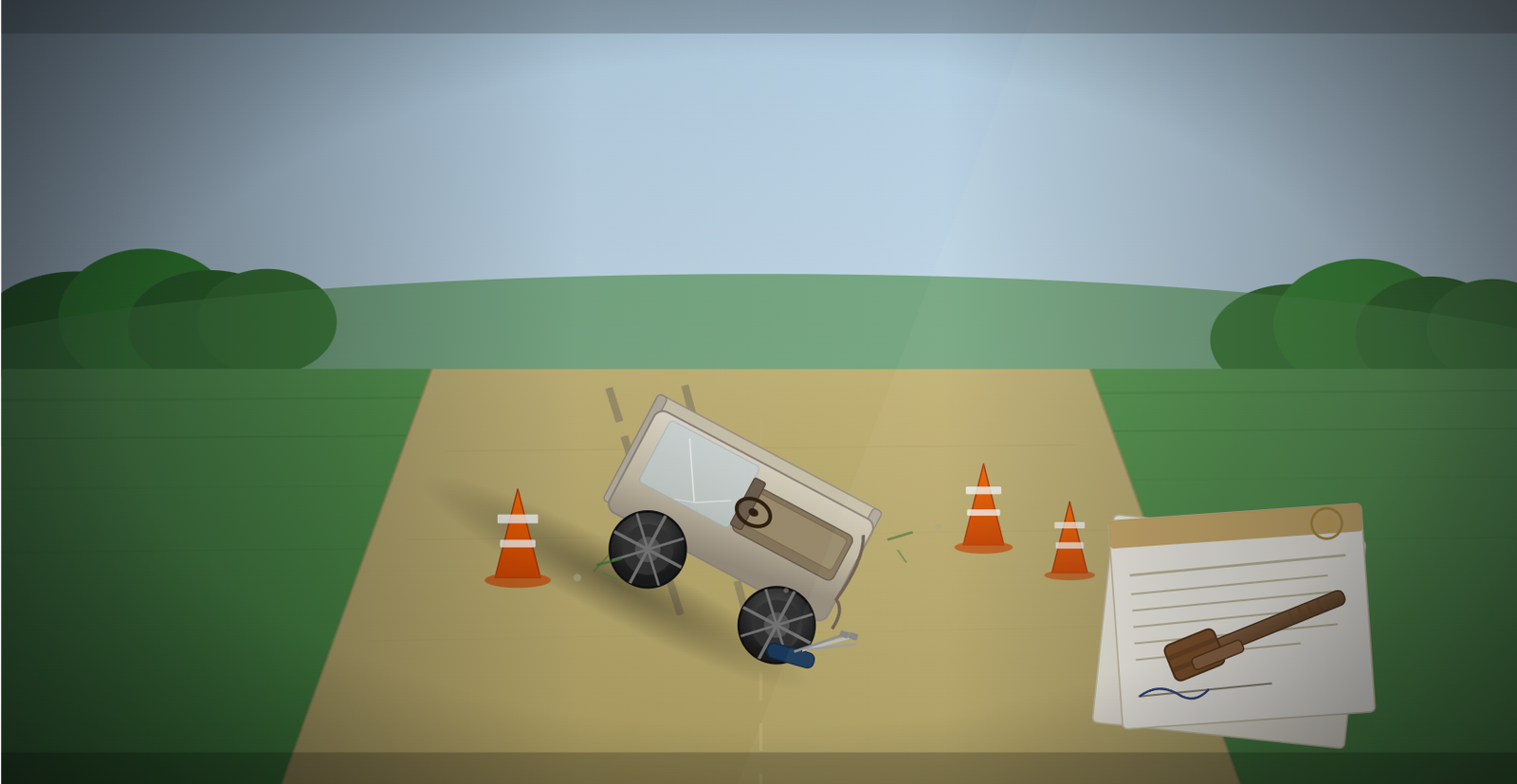
Rollovers are one of the leading injury mechanisms in golf cart accidents. When a cart tips, occupants who often have nothing to hold onto can be ejected or crushed.
Slopes and hills make this worse. Even a moderate incline combined with a sideways turn can destabilize a cart quickly.
Tip: Slow down significantly before any turn. Never drive across steep slopes at an angle. Always approach hills straight on.
3. Distracted or Impaired Driving
This one is more common than people admit.
Golf outings often involve alcohol. According to research by the National Institute on Alcohol Abuse and Alcoholism (NIAAA), alcohol impairs balance, judgment, and reaction time all critical when operating any vehicle, including a golf cart.
Distracted driving is also a factor. Checking a phone, chatting with a passenger, or even fumbling with a scorecard takes your attention off the path. At 15 mph, you can travel 22 feet per second more than enough distance to miss a hazard.
Tip: Never operate a golf cart under the influence of alcohol or drugs. Keep your eyes on the path, not your phone.
4. Passengers Sitting Improperly or Hanging Off the Cart
Here’s a classic scene at any golf course: someone sitting sideways, legs dangling off the cart, or a third person perched on the back.
This is a recipe for disaster.
Improper seating shifts the center of gravity and increases the chance of a passenger being thrown off during sudden movements. Children are especially vulnerable they’re lighter, less stable, and more likely to slide or fall unexpectedly.
Tip: Follow the cart’s passenger capacity strictly. No one should ride on the back or sides. All passengers should sit fully in their seats, facing forward.
5. Poor Maintenance and Mechanical Failures
A golf cart that isn’t properly maintained is a safety hazard waiting to happen. Brake failure is particularly dangerous and unfortunately, not uncommon in older or poorly maintained carts.
Other mechanical issues that contribute to accidents include:
- Worn or flat tires that reduce grip and handling
- Faulty steering systems
- Malfunctioning battery systems in electric carts
- Loose or damaged seats
The CPSC has documented multiple injuries linked directly to equipment failure, including incidents where brakes failed on downhill paths.
Tip: Inspect your golf cart regularly. Check brakes, tires, steering, and battery connections before each use. Schedule professional servicing at least once per year.
6. Driving on Inappropriate Terrain
Golf carts are built for flat, smooth surfaces. People take them on hiking trails, gravel paths, rocky roads, and steep hills none of which are appropriate.
Uneven terrain dramatically increases the risk of rollovers and loss of control. Wet grass after rain can be particularly slippery, reducing braking distance and traction.
Tip: Use golf carts only on surfaces they were designed for. If you’re driving in a community or resort, stay on designated paths.
7. Inadequate Training and Inexperienced Operators
Teenagers and first-time users are at significantly higher risk of causing accidents. Many people assume golf carts are so simple that no training is needed. But operating any vehicle even a slow one requires understanding how it handles, stops, and responds.
Young drivers may not appreciate how quickly a cart can tip or how little stopping power it has on a decline. Inexperience combined with curiosity about speed is a dangerous mix.
Tip: Always give new or young operators proper instruction before letting them drive independently. Set clear rules: no speeding, no sharp turns, no passengers beyond the rated capacity.
8. Lack of Safety Equipment
Most standard golf carts come without basic safety features that we take for granted in cars:
- No seatbelts
- No roll bars or cages
- No turn signals or headlights (in many models)
- No rearview mirrors
This means a minor accident can turn serious fast. Without a seatbelt, even a low-speed bump can cause someone to be ejected.
Many manufacturers now offer safety upgrades, and some states require seatbelts and lights for street-legal golf carts (often called LSVs Low-Speed Vehicles).
Tip: If your cart doesn’t have seatbelts, consider having them installed. Add side mirrors and headlights if you drive at dawn, dusk, or in low-visibility conditions.
9. Night or Low-Visibility Driving
Golf carts used in resorts, campgrounds, or large properties often operate at night. Without proper lighting, visibility drops sharply both for the driver and for pedestrians nearby.
Many standard golf carts have minimal lighting that isn’t strong enough for safe nighttime use. Driving in the dark without adequate lights is one of the more underreported causes of golf cart incidents.
Tip: Avoid nighttime driving unless your cart has proper headlights, taillights, and reflectors. Wear light-colored or reflective clothing if you must be out after dark.
10. Children Operating Golf Carts Unsupervised
This deserves its own section because it’s a significant problem.
The CPSC reports that children under 16 account for a disproportionate share of golf cart-related injuries. In many cases, children are operating carts without adult supervision, often on private property where no legal age restriction is enforced.
Children may lack the physical coordination, judgment, and spatial awareness needed to safely operate a cart especially at speed or on uneven terrain.
Tip: Never allow unsupervised children to operate golf carts. Set firm household rules if you own one. The cutoff age recommended by most safety organizations is 16, though this varies by jurisdiction.
Golf Cart Safety Laws: What You Should Know
Laws around golf cart use vary widely by state and municipality.
In many states, golf carts are legally permitted on public roads with speed limits of 35 mph or less. These “street-legal” models classified as Low-Speed Vehicles (LSVs) must meet federal safety standards that include seatbelts, mirrors, lighting, and windshields.
However, standard golf carts used on private property or golf courses fall under fewer regulations, which creates a safety gray area.
Always check your local laws before operating a golf cart on public roads. Some states require a valid driver’s license; others do not.
Quick Safety Checklist Before Every Ride
Use this simple checklist before operating a golf cart:
- Check brakes Test them before moving at speed.
- Inspect tires Look for wear, low pressure, or damage.
- Confirm passenger count Don’t exceed the cart’s rated capacity.
- Check battery/fuel level Running out mid-slope is a hazard.
- Verify mirrors and lights Essential if driving in low light.
- Sober check Don’t drive if you’ve had alcohol.
- Route check Know the terrain. Avoid steep, wet, or uneven paths.
