

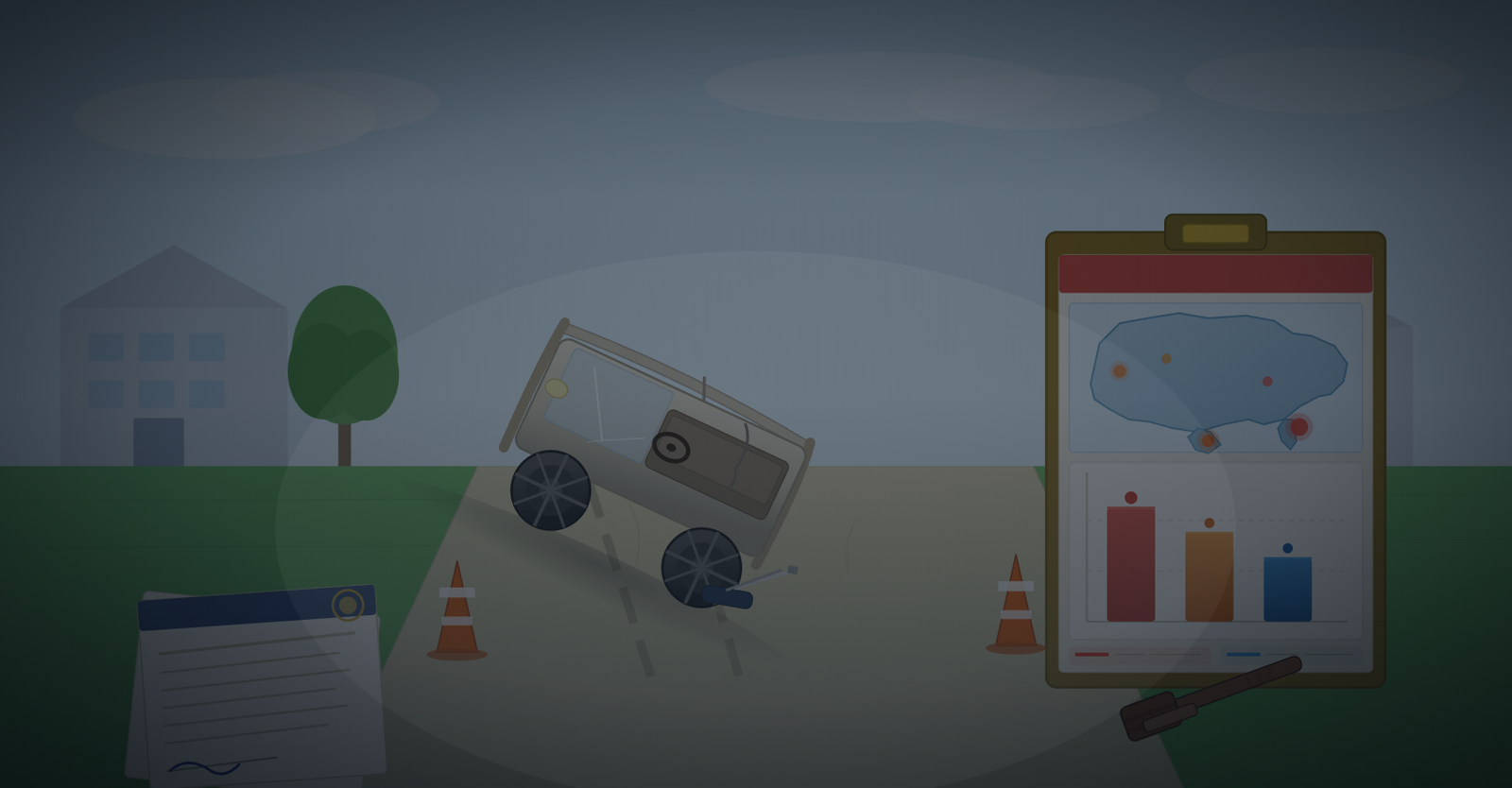
Golf carts are everywhere now. They’ve moved far beyond the fairway.
You’ll find them cruising retirement communities in Florida, ferrying passengers across resort grounds in South Carolina, transporting workers on college campuses in California, and carrying families through private neighborhoods in virtually every state. Their presence has quietly multiplied and so has the toll of accidents they cause.
If you think golf cart accidents are rare, minor, or mostly harmless, the data tells a very different story. The golf cart accident statistics for the USA reveal a growing public safety concern that most people simply aren’t aware of until they or someone they love gets hurt.
Let’s walk through the numbers honestly, clearly, and with the full context they deserve.
The Nationwide Scale of Golf Cart Accidents in the USA
The best starting point for understanding the scope of this problem comes from the U.S. Consumer Product Safety Commission (CPSC), which has tracked golf cart injuries through its National Electronic Injury Surveillance System (NEISS) for decades.
According to CPSC data analyzed in a widely cited study published in the American Journal of Emergency Medicine, an estimated 15,000 golf cart-related injuries are treated in U.S. emergency rooms every single year.
That works out to roughly 41 people per day nearly two every hour showing up at an ER because of a golf cart accident.
And this figure has been rising. Researchers who examined injury trends over a multi-year period found that golf cart injury rates increased significantly as the vehicles expanded into non-golf settings. From the early 1990s through the 2010s, reported injuries roughly doubled.
The reasons are straightforward: more carts, more settings, more operators, and more passengers — many of whom have no training and no awareness of how dangerous these vehicles can be.
Golf Cart Accident Injuries by Type
Not all golf cart injuries are the same. Understanding what kinds of injuries occur and how often helps explain why this issue demands serious attention.
Soft Tissue and Orthopedic Injuries
The most common golf cart injuries involve soft tissue damage and bone fractures. Lacerations, contusions, sprains, and fractures account for the majority of ER visits.
The CPSC data consistently shows that fractures make up approximately 38–40% of golf cart injuries, with wrists, arms, and ankles being especially vulnerable. These injuries typically result from falls or ejections where the victim braces themselves on impact.
Head and Brain Injuries
Head injuries are the most medically serious outcome of golf cart accidents. Research published in the Journal of Trauma and Acute Care Surgery found that traumatic brain injuries (TBIs) occur at a meaningful rate in golf cart incidents particularly in rollover and ejection events.
A study co-authored by researchers at the University of Iowa found that head and neck injuries accounted for roughly 19% of all golf cart injuries treated in emergency rooms. Given that most standard golf carts lack rollover protection and seatbelts, this figure is not surprising but it is alarming.
Spinal Injuries
Spinal injuries, while less frequent than fractures or lacerations, represent some of the most life-altering outcomes in golf cart accidents. Cervical spine injuries which can cause paralysis have been documented in rollover incidents and high-speed ejections.
Fatal Injuries
Deaths from golf cart accidents are documented, though relatively rare compared to overall injury volume. Fatalities most often occur when carts travel on public roads and are struck by larger vehicles, or in rollover incidents involving modified high-speed carts.
Golf Cart Accidents by Demographic Group
One of the most important findings in the research is who gets hurt because it’s not evenly distributed.
Children and Teenagers
Children are disproportionately represented in golf cart accident statistics. The CPSC data shows that children under 16 account for approximately 30–33% of all golf cart-related ER visits.
A landmark study published in Pediatrics the journal of the American Academy of Pediatrics examined golf cart injuries in children specifically. It found that most pediatric golf cart injuries involved falls from the vehicle and that a significant portion of injured children were passengers, not drivers.
The study also noted that the majority of pediatric injuries occurred on private property or golf courses not on public roads which means existing traffic laws provided little to no protection.
Head injuries in children from golf cart accidents are especially concerning. Children’s developing brains are more vulnerable to TBI, and the long-term effects of even moderate concussions can affect learning, behavior, and cognitive development.
Adults Over 65
Older adults represent the second high-risk group. This is closely tied to the explosion of golf cart use in retirement communities where carts are often the primary local transportation mode.
Falls and ejections that might cause only moderate injuries in younger adults can cause hip fractures, multiple rib fractures, and serious head trauma in older individuals with reduced bone density and balance capabilities.
The American Academy of Orthopaedic Surgeons (AAOS) notes that hip fractures in adults over 65 carry a significantly elevated risk of surgical complications and long-term mobility loss making golf cart falls particularly consequential for this population.
Adult Men
Among adult victims, men are injured at a somewhat higher rate than women in golf cart incidents, likely reflecting higher rates of operation, greater risk-taking behavior, and more frequent modification of carts for higher speeds.
Golf Cart Rollover Statistics
Rollovers deserve their own section because they produce the most severe injuries and are the most preventable accident type.
Golf carts have a notably high center of gravity relative to their wheelbase. This design characteristic combined with the common absence of stability control systems makes them susceptible to tipping, especially during:
- Sharp or sudden turns
- Driving across slopes at an angle
- High-speed operation
- Exceeding passenger capacity (overloading)
Research findings consistently show that rollovers account for a significant proportion of the most serious golf cart injuries particularly those involving head trauma, spinal injuries, and fatalities.
One study in the American Journal of Emergency Medicine found that ejection occurred in roughly 31% of golf cart accidents, and ejection is most commonly associated with rollover events. When a cart tips and an unrestrained occupant is thrown clear, the risk of serious head or spinal injury rises dramatically.
The absence of seatbelts in most standard golf carts is a primary contributing factor. Even a relatively low-speed rollover can be catastrophic without restraint.
Geographic Patterns in Golf Cart Accidents
Golf cart accident statistics in the USA are not evenly distributed across the country. Certain states and environments see significantly higher rates.
Florida
Florida consistently leads the nation in golf cart-related incidents, for understandable reasons. The state has the highest concentration of age-restricted retirement communities in the country many of which are organized around golf cart transportation. Cities like The Villages, with a population exceeding 130,000, are built on golf cart infrastructure.
Florida also has some of the most extensive golf cart road-use laws in the country, permitting carts on roads with speed limits of 30 mph or less in many municipalities. More road access equals more exposure to traffic and more accidents.
Sun Belt States
Beyond Florida, the broader Sun Belt including Arizona, Texas, Georgia, and the Carolinas sees elevated golf cart accident rates due to large retirement populations, extensive resort and golf communities, and year-round cart use enabled by warm weather.
College Towns
University campuses represent a distinct high-risk environment. Golf carts are widely used for facilities management, athletic operations, and campus transportation. Incidents involving inexperienced young operators and pedestrian crossings are documented across numerous institutions.
The Role of Alcohol in Golf Cart Accidents
No discussion of golf cart accident statistics in the USA would be complete without addressing alcohol.
Golf culture and social drinking have a long association. The National Institute on Alcohol Abuse and Alcoholism (NIAAA) is clear that alcohol impairs the cognitive and motor skills required for safe vehicle operation including balance, reaction time, depth perception, and judgment.
Research has identified alcohol as a contributing factor in a meaningful subset of golf cart accidents, particularly those involving adult male operators and those occurring on golf courses themselves.
What makes this especially problematic from a legal and safety standpoint: in most states, DUI laws technically apply to golf carts when operated on public roads. But on private property golf courses, resorts, residential communities enforcement is inconsistent at best.
Economic and Legal Impact of Golf Cart Accidents
The financial toll of golf cart accidents adds another dimension to the statistics.
Emergency room treatment, hospitalization, surgical intervention, and rehabilitation for serious golf cart injuries generate substantial medical costs. For TBIs and spinal injuries, lifetime care costs can run into hundreds of thousands of dollars.
Personal injury litigation involving golf cart accidents has grown alongside injury rates. Cases involving negligent operation, inadequate maintenance, unsafe course or community design, and product liability (defective carts or components) are increasingly common in civil courts across the country.
Golf cart liability insurance has become a standard offering and in some retirement communities, a requirement reflecting the legal and financial risk these vehicles present.
What the Statistics Tell Us About Prevention
The most important takeaway from U.S. golf cart accident statistics is this: the vast majority of these injuries are preventable.
Seatbelts and Restraint Systems
If golf carts were equipped with functioning seatbelts and occupants used them consistently, ejection-related injuries which include the most severe outcomes would drop substantially. The data from Low-Speed Vehicles (LSVs), which are federally required to have seatbelts, supports this conclusion.
Speed Restriction and Anti-Modification Rules
Modifying golf carts to exceed their designed speed range dramatically increases rollover and accident risk. Communities and golf courses that enforce speed limits and prohibit speed modifications see lower serious injury rates.
Minimum Age Requirements
Given that children under 16 account for nearly a third of all golf cart injuries, minimum age requirements for operators have a clear evidence base. Several states have adopted 16 as the minimum operating age; more should follow.
Operator Training
Basic training even a brief orientation on handling, braking, turning, and safe passenger behavior reduces accident rates among new users. This is especially relevant in resort and retirement community settings where many operators are first-time users.
Improved Lighting and Visibility Standards
A meaningful proportion of golf cart accidents occur during low-light conditions. Requiring functioning headlights, taillights, and reflectors and enforcing their use addresses a real and specific risk factor.
Key Golf Cart Accident Statistics USA at a Glance
Here’s a concise reference summary of the core data points covered in this article:
- 15,000 golf cart-related ER visits occur annually in the USA (CPSC / AJME data)
- 41 people per day are treated in emergency rooms for golf cart injuries
- Golf cart injury rates roughly doubled from the early 1990s to the 2010s
- 38–40% of golf cart injuries involve fractures
- 19% involve head or neck injuries
- Children under 16 account for approximately 30–33% of all golf cart ER visits
- 31% of golf cart accidents involve ejection of an occupant
- Florida leads all states in golf cart incidents due to retirement community density
- Alcohol is a documented contributing factor in a significant subset of adult golf cart accidents
- Most standard golf carts lack seatbelts, airbags, roll cages, or other primary safety features
Final Thoughts and Your Next Step
The numbers are clear. Golf cart accidents in the USA cause real, serious, and often preventable harm to children, to older adults, and to anyone who rides or operates one without adequate awareness or precaution.
The solution isn’t to stop using golf carts. It’s to use them responsibly and to demand better safety standards from manufacturers, communities, and regulators.
If this article gave you a clearer picture of a problem you may have underestimated, that’s exactly the point.
Share this article with your community, your golf club, or your neighborhood association. The more people understand the real statistics behind golf cart accidents, the more pressure builds for the safety improvements these numbers clearly justify. Have a question or a personal experience to share? Drop a comment below your story might help someone else.
