

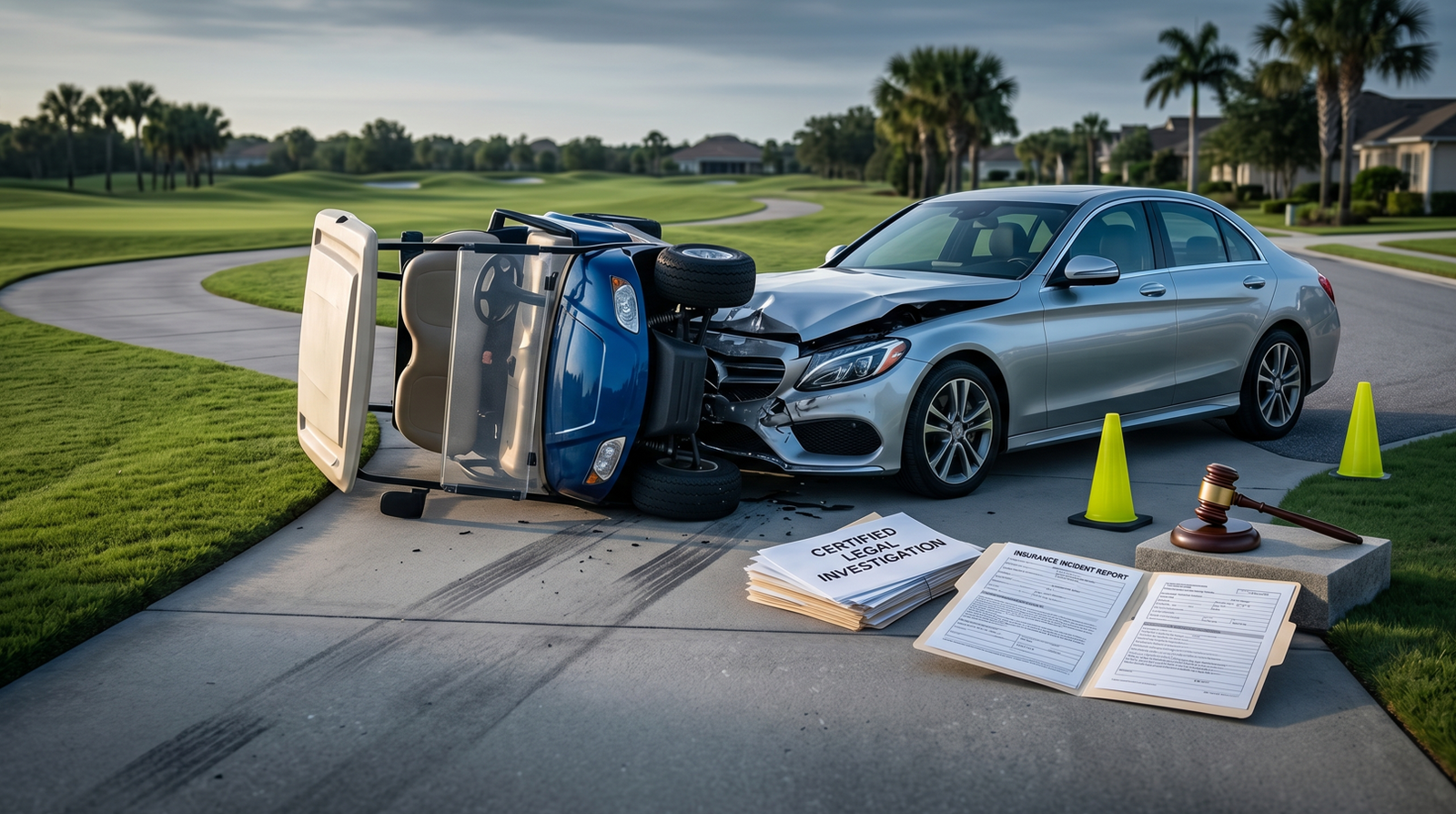
It is a common sight in sun-drenched retirement communities and sprawling resorts: the humble golf cart buzzing alongside standard passenger vehicles. While they may share the same asphalt, a golf cart is not just a “mini-car.” The differences in engineering, safety standards, and legal repercussions during an accident are vast.
Understanding these distinctions is essential for anyone navigating neighborhood streets in a low-speed vehicle. When a collision occurs, the “physics of the fairway” meets the “reality of the road,” often with life-altering results.
Mechanical Engineering and Crash Worthiness
The most fundamental difference between a car and a golf cart is how they are built to handle an impact. Cars are heavily regulated mobile fortresses; golf carts are lightweight utility vehicles.
Structural Integrity
Modern cars are designed with sophisticated crumple zones intended to absorb kinetic energy during a crash, protecting the cabin. They feature reinforced steel frames and side-impact bars. In contrast, golf carts are often made of fiberglass or thin plastic with an open-air design. They offer virtually no structural protection if hit by a larger object.
Safety Technology
A standard car is packed with safety tech:
-
Airbags: Multiple deployment zones to cushion impact.
-
Seatbelts: Three-point harnesses with pre-tensioners.
-
Glass: Shatter-resistant windshields.
Golf carts frequently lack these basics. Many models do not come standard with seatbelts, and their windshields (if present) may not be automotive-grade safety glass. This lack of a “safety bubble” means the occupants absorb the force of the accident directly.
The Physical Impact and Common Injuries
When these two vehicles collide, or even when they crash independently, the injury profiles look very different. The “Law of Gross Tonnage” usually means the smaller vehicle and its passengers suffer the most.
Why Golf Cart Injuries are Unique
Because golf carts are open-air, the risk of ejection is the primary concern. In a car, the vehicle usually keeps you inside. In a golf cart, a sharp turn or a minor bump can send a passenger flying onto the pavement.
-
Traumatic Brain Injuries (TBI): Research indicates that 80% of neurosurgical injuries from golf carts involve skull fractures.
-
Crush Injuries: Due to a high center of gravity and narrow wheelbase, golf carts are prone to rollovers. If the cart tips, it can pin the passenger underneath its frame.
-
Limb Fractures: Passengers often stick a leg or arm out to “catch” a tipping cart, leading to severe compound fractures or amputations.
Car Accident Injury Patterns
Car injuries often involve “internal” trauma within the cabin, such as whiplash from sudden deceleration or internal bruising from seatbelt tension. While dangerous, these are often mitigated by the car’s safety features that are absent in a cart.
Legal and Insurance Complications
If you get into a car accident, the legal path is well-worn. Golf cart accidents, however, often fall into a “grey area” of the law that catches many owners by surprise.
Insurance Coverage Gaps
Most people assume their homeowners’ insurance covers their golf cart. However, this coverage usually ends the moment the cart leaves your private driveway. If you have an accident on a public road or at a resort, you may be personally liable for thousands of dollars in damages unless you have a specific Golf Cart Endorsement or a separate LSV (Low-Speed Vehicle) policy.
Determining Liability
In a car-on-car accident, “black box” data or dashcam footage is common. Most golf carts lack electronic data recorders. This makes legal cases more dependent on:
-
Physical evidence like skid marks.
-
Witness testimony.
-
Local ordinances regarding where carts are allowed to drive.
Safety Tips for the Savvy Operator
While you cannot change the laws of physics, you can change how you operate your vehicle. To minimize the risk of a serious accident, follow these professional tips:
-
Install Seatbelts: It is the single most effective way to prevent ejection-related fatalities.
-
Slow Down on Turns: Golf carts are top-heavy. A turn at 15 mph that feels safe in a car can cause a golf cart to flip.
-
Keep Limbs Inside: Never hang your feet off the side or hold onto the roof supports during a turn.
-
Avoid Overloading: More passengers mean a higher center of gravity, increasing the risk of a rollover.
Conclusion: Awareness is Your Best Protection
A golf cart accident is not just a “small car accident.” It is a high-risk event where the human body is exposed to forces the vehicle isn’t designed to handle. By respecting the mechanical limits of the cart and ensuring you have the right legal protections in place, you can enjoy the convenience of your cart without the catastrophic risk.
Have you checked your insurance policy for golf cart coverage lately? Comment your thoughts below or share this article with your neighborhood group to keep everyone safe!
