

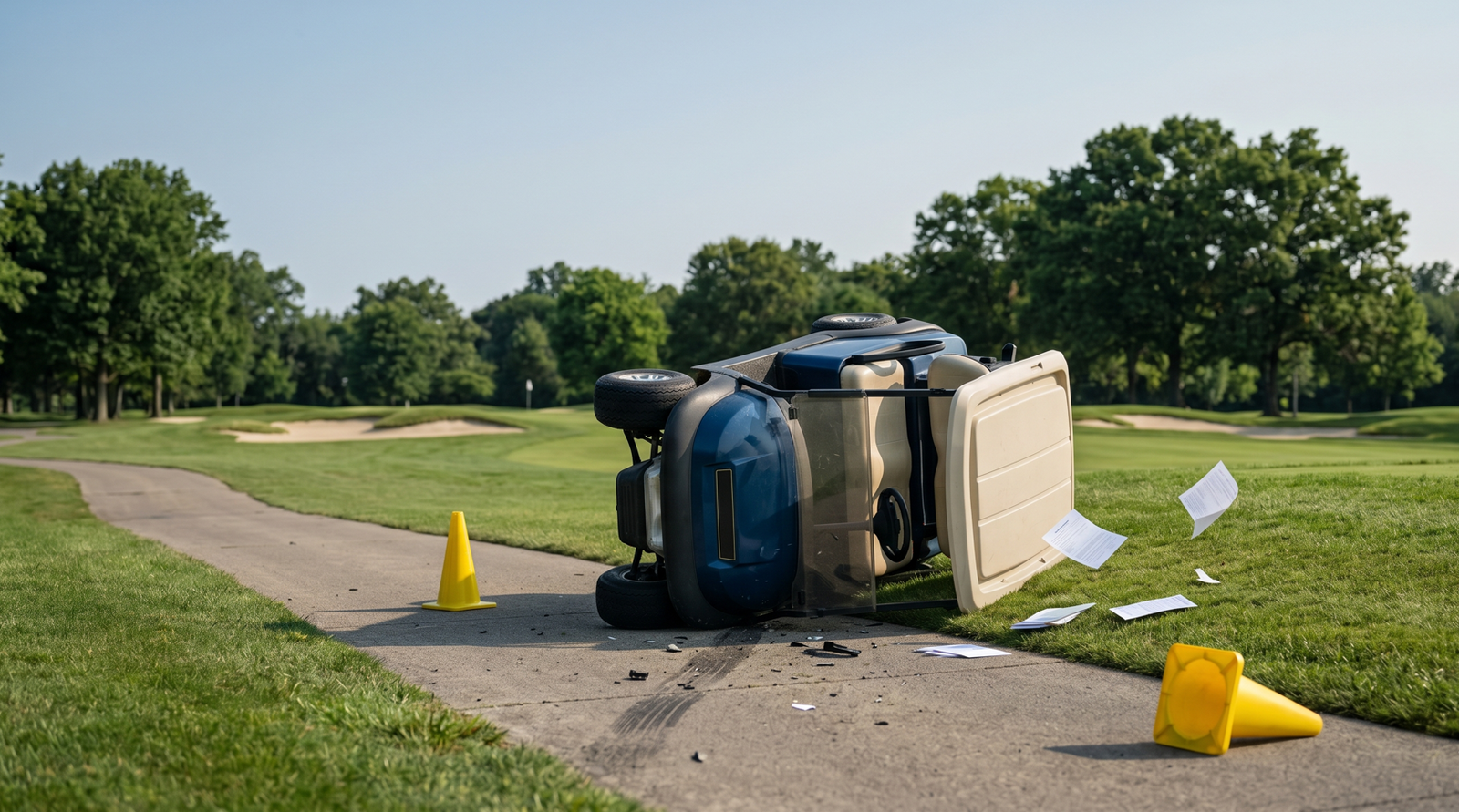
Understanding Golf Cart Rollover Accident Injuries and Safety
While golf carts were once reserved for the pristine fairways of local country clubs, they have become a staple for transportation in retirement communities, large resorts, and even residential neighborhoods. However, this increased accessibility brings a hidden danger: golf cart rollover accidents.
Because these vehicles are often designed without the rigorous safety standards of passenger cars—such as airbags or heavy steel framesa rollover can lead to devastating physical consequences. This article explores the common injuries associated with these accidents, the physics behind them, and how you can stay safe.
Why Golf Cart Rollovers are Surprisingly Dangerous
It might seem counterintuitive that a vehicle capped at 15 to 25 mph can be dangerous. However, the risk lies in the vehicle’s design. Golf carts typically have a high center of gravity and a relatively narrow wheelbase, making them prone to tipping during sharp turns or on uneven terrain.
According to the Consumer Product Safety Commission (CPSC), thousands of golf cart-related injuries are reported annually, with a significant portion involving lateral rollovers (CPSC, 2024). When a cart tips sideways, the occupants are often ejected or, worse, pinned beneath the vehicle’s frame.
Common Injuries from Golf Cart Rollover Accidents
When a rollover occurs, the body is subjected to sudden centrifugal forces and impact. Injuries range from minor scrapes to life-altering trauma.
1. Traumatic Brain Injuries (TBIs) and Skull Fractures
Head injuries are the most severe and frequent result of rollovers. In a study of neurosurgical injuries related to golf carts, 80% of patients suffered skull fractures, and 76% experienced intracranial hemorrhages (neurosurgical monitoring was required for the majority of these cases) (PMC, 2024).
-
Concussions: Even without a skull fracture, the sudden “jolt” can cause the brain to strike the inside of the skull.
-
Hematomas: Internal bleeding can occur, which may not show symptoms immediately but requires urgent medical intervention.
2. Spinal Cord and Back Injuries
The rotational movement of a rollover puts immense stress on the spine.
-
Disc Herniations: Repetitive loading or sudden impact can cause spinal discs to protrude, irritating nerves and causing “sciatica” or radiating pain (Centeno-Schultz Clinic, 2025).
-
Vertebral Fractures: The weight of the cart landing on a passenger can lead to crushed vertebrae, potentially resulting in permanent paralysis.
3. Long Bone Fractures and Crush Injuries
Occupants often instinctively reach out to “break their fall” during a rollover. This results in:
-
Arm and Wrist Fractures: The impact of the ground or the cart’s roof pillars.
-
Leg and Pelvic Fractures: These often occur when the cart rolls over onto the lower body, pinning the victim.
4. Facial Trauma and Lacerations
Broken glass (if the cart has a windshield) and contact with the steering wheel or the ground can cause deep lacerations and dental injuries.
Key Factors That Increase Rollover Risk
Understanding why these accidents happen is the first step toward prevention. Data suggests that 91% of golf cart accidents occur while the vehicle is being driven, with a high frequency of “falling on slopes” (MDPI, 2022).
| Risk Factor | Why it Happens |
| Sharp Turns at Speed | The high center of gravity causes the cart to “trip” over its own wheels. |
| Uneven Terrain | Steep hills or embankments exceed the cart’s lateral stability limits. |
| Overloading | Too many passengers (or heavy gear) raises the center of gravity even further. |
| Operator Inexperience | Younger drivers or those unfamiliar with the cart’s handling may oversteer. |
Step-by-Step Guide to Preventing Rollovers
To keep your weekend round or neighborhood cruise safe, follow these professional safety tips:
-
Reduce Speed on Turns: Always slow down before initiating a turn. Never “whip” the steering wheel.
-
Avoid Steep Slopes: If a path looks too steep, it probably is. Stick to designated paths which are engineered for the cart’s grade capabilities.
-
Keep All Limbs Inside: Never hang feet or arms outside the cart. In a rollover, these are the first parts of the body to be crushed.
-
Distribute Weight Evenly: Ensure passengers are seated and that heavy bags are secured in the back.
-
Install Seat Belts: While many carts don’t come with them, adding aftermarket seat belts can prevent ejection, which is the leading cause of fatal injuries (CPSC, 2016).
Modern Technology and Safety Standards
The industry is slowly shifting toward better safety. New “fuzzy control” solutions for active anti-roll bars are being researched to enhance stabilization (Nguyen, 2023). Some modern carts now include:
-
Front-wheel brakes for better stopping power.
-
Speed limiters to prevent excessive speed on descents.
-
Automatic parking brakes to prevent roll-away accidents on hills.
The Verdict: Play it Safe
Golf carts offer a sense of freedom and convenience, but they are not toys. A rollover accident can happen in the blink of an eye, turning a fun afternoon into a medical emergency. By staying mindful of the terrain and respecting the vehicle’s limitations, you can enjoy the ride without the risk.
Did you find this guide helpful? Share this article with your local golf community or comment below with your own safety tips!
