
Golf cart accidents are often dismissed as minor incidents, but in reality, they can lead to severe injuries, complex liability disputes, and significant financial loss. When you are involved in such an accident, the road to recovery is often complicated by insurance companies that prioritize their bottom line over your well-being. Successfully managing this process—from understanding claim denials to mastering the art of negotiation—requires a strategic, evidence-based approach.
Understanding the Financial Anatomy of a Claim
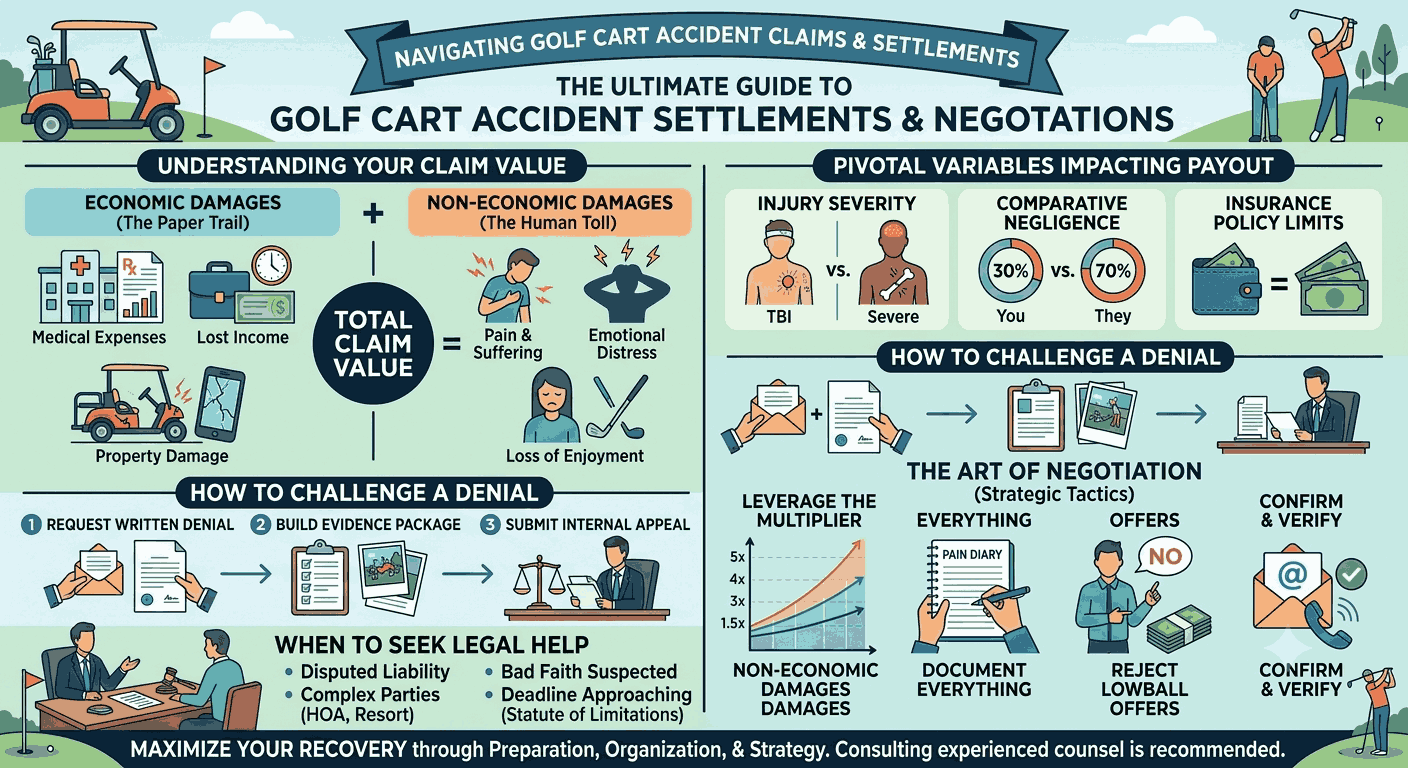
To effectively negotiate, you must first understand how your case is valued. Settlements are not arbitrary figures; they are calculated based on two distinct categories of damages.
Economic Damages: The “Paper Trail”
Economic damages are quantifiable, objective losses. These are the costs that can be proven with receipts, invoices, and bank records.
-
Immediate Medical Expenses: This includes the full spectrum of emergency care, such as ambulance fees, emergency room stabilization, diagnostic imaging (X-rays, MRIs, CT scans), and initial surgical procedures.
-
Ongoing Rehabilitation: Many golf cart injuries—such as broken limbs or spinal injuries—require long-term physical therapy, follow-up specialist consultations, and sometimes secondary surgeries.
-
Lost Income and Future Earning Capacity: If your injury forces you to miss work, you are entitled to compensation for those lost wages. Furthermore, if your recovery limits your ability to perform your job in the future, you may claim compensation for reduced earning capacity.
-
Property Damage: This includes the costs to repair or replace your personal golf cart, as well as any high-value items damaged during the crash, such as smartphones, sports equipment, or personal belongings.
Non-Economic Damages: The “Human Toll”
Non-economic damages are intangible but are often the largest component of a settlement.
-
Pain and Suffering: This compensates you for the physical agony endured during the accident and the recovery process.
-
Emotional Distress: Accidents can cause lasting psychological impacts, including anxiety, insomnia, or PTSD, particularly if the accident involved a traumatic event like a rollover.
-
Loss of Enjoyment: This reflects the disruption to your lifestyle, such as the inability to participate in hobbies, community events, or family activities that were once a core part of your life.
Pivotal Variables Impacting Your Payout
Even with a detailed list of damages, insurance adjusters analyze several variables that can drastically alter your settlement.
-
Injury Severity and Permanence: Catastrophic injuries that lead to permanent disfigurement or long-term disability command significantly higher settlements than minor soft-tissue injuries.
-
Comparative Negligence: Most jurisdictions reduce your compensation based on your percentage of fault. If the insurer finds you 30% responsible for the accident, your final payout will be reduced by 30%.
-
Insurance Policy Limits: The at-fault party’s policy acts as a “ceiling” for your settlement. If your damages exceed these limits, you may struggle to recover the full amount unless you can identify additional coverage layers, such as umbrella policies.
-
Strength of Evidence: Gaps in medical treatment or missing documentation can provide insurers with the justification they need to devalue your claim.
Navigating Denied Claims
A denial is often not the end of the process, but the beginning of a formal dispute.
-
Requesting a Written Denial: You must demand a formal letter from the insurer that explicitly cites the policy language used to reject your claim.
-
Building an Evidence Package: To overturn a denial, you must supply the missing information that the adjuster claimed was lacking, such as missing police reports, witness statements, or supplementary medical records.
-
Internal Appeals: Utilize the insurance company’s internal appeals process to present your new evidence formally.
-
The Statute of Limitations: Be aware that every state has a strict legal deadline for filing a lawsuit. Missing this date permanently forfeits your right to compensation.
The Art of Negotiation
Negotiation is a professional process that rewards preparation and emotional control.
Strategic Negotiation Tactics
-
The Multiplier Method: Insurers often use a multiplier (between 1.5 and 5) on your economic damages to determine non-economic awards. Argue for a higher multiplier if your injuries were severe or required intensive long-term care.
-
The “Confirm and Verify” Strategy: Always follow up phone conversations with an email summarizing what was discussed. This creates an essential paper trail.
-
Responding to Lowball Offers: Never accept the first offer. A firm, evidence-backed rejection shows the insurer that you understand the true value of your claim.
-
Professionalism: Maintain a professional tone in all communications. Emotional language can be used to label you as an unreliable witness.
When to Escalate to Legal Counsel
Consider consulting an attorney if:
-
Liability is disputed by the other party.
-
The accident involved multiple complex parties like HOAs, resorts, or manufacturers.
-
You suspect “bad faith”—where the insurer intentionally misrepresents policy terms or refuses to investigate.
-
The statute of limitations is approaching.
Conclusion
Managing a golf cart accident claim is a complex responsibility that requires diligence and professional attention. By meticulously documenting your damages, understanding the variables that influence your settlement value, and approaching negotiations with a strategic mindset, you can effectively challenge unfair denials and advocate for the recovery you deserve.
References
-
Understanding Golf Cart Accident Settlements and Values (2026).
-
American Association for Justice (2026). Insurance Bad Faith: Understanding Your Rights When Claims Are Unfairly Denied.
-
Pivotal Variables That Can Drastically Alter Your Payout (2026).
-
How To Handle A Denied Golf Cart Accident Insurance Claim (2026).
