
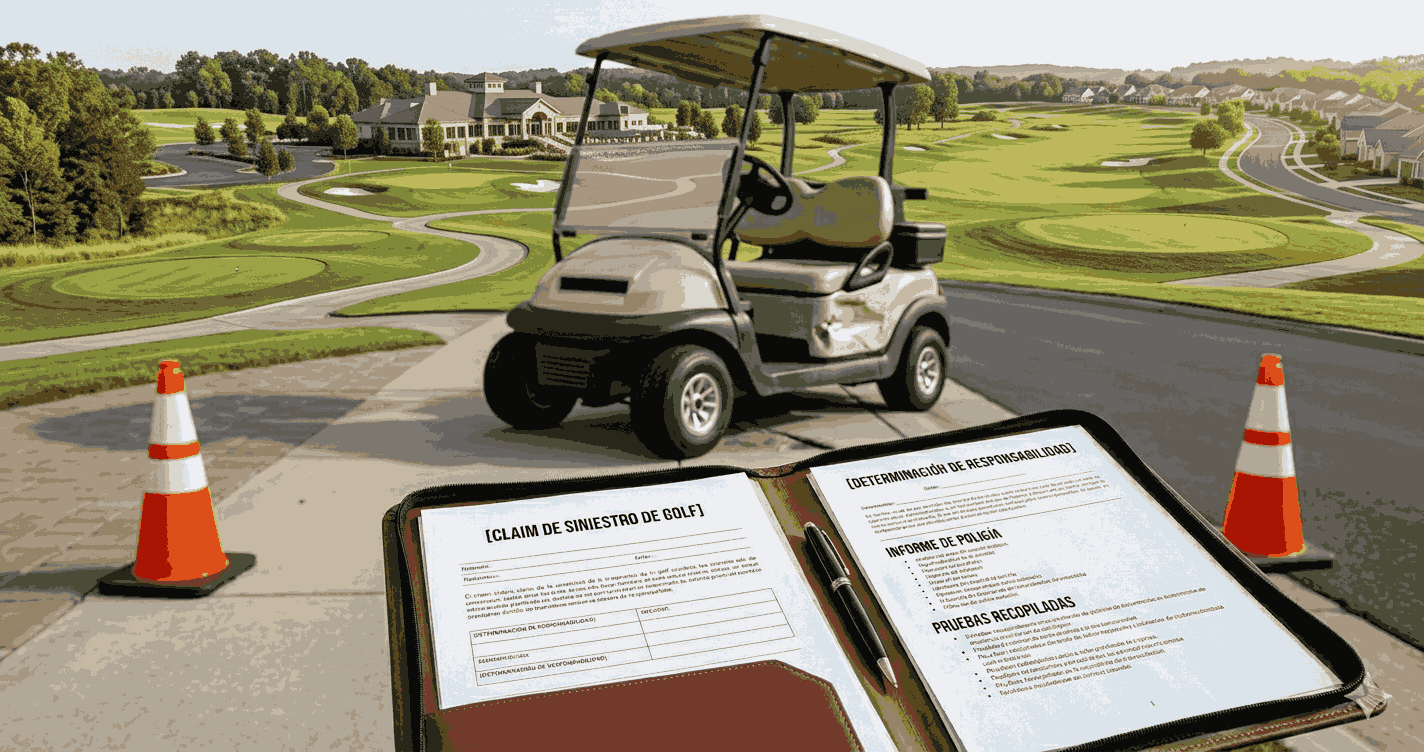
When we think of a day on the golf course, we think of pristine greens, manicured fairways, and a relaxing pace of play. We rarely think about heavy machinery. Yet, golf carts are motorized vehicles weighing up to 1,000 pounds and capable of reaching speeds of 15 to 20 miles per hour. Because they lack standard automotive safety features like doors, airbags, and crumpled zones, a sudden crash or rollover can result in serious, life-altering bodily harm.
If an accident occurs on the links, who is on the hook? While a reckless driver is often the primary target, the facility itself isn’t automatically off the radar.
Determining exactly when a country club or public course shares financial fault involves navigating a complex matrix of premises liability, mechanical negligence, and contract law.
The Legal Baseline: When Is a Golf Course Responsible?
Under the legal concept of premises liability, property owners and business operators owe a strict “duty of care” to their paying guests. For a golf course, this means they are legally required to maintain the grounds, pathways, and their rental fleet in a reasonably safe condition.
To hold a golf course financially responsible for a golf cart accident, an injured party must prove three core elements of negligence:
-
A Hazard Existed: There was an unreasonably dangerous condition on the course or a mechanical defect with the cart.
-
The Course Knew (or Should Have Known): Management had actual or constructive knowledge of the hazard but failed to fix it or warn players.
-
Direct Causation: The specific hazard or mechanical failure directly triggered the accident and resulting injuries.
If these elements are met, the course’s commercial general liability policy can be targeted for medical bills, lost wages, and pain and suffering.
1. Failure to Maintain Safe Cart Paths and Grounds
A golf course expects hundreds of carts to traverse its terrain daily. If a crash or rollover happens because the physical environment was inherently unsafe, the course can be held liable.
Hidden Path Hazards
Over time, tree roots can crack asphalt paths, creating severe, jagged ridges. Similarly, heavy rains can wash out dirt or gravel paths, creating deep ruts. If a golfer hits an unmarked, obscured pothole or a severe structural collapse on a designated path, causing the cart to swerve violently or flip, the course is typically at fault for failing to repair the path.
Blind Corners and Poor Design
Courses must be engineered with safe traffic flow in mind. If a sharp curve is completely hidden by un-trimmed, overgrown landscaping, or if a path sends carts down an incredibly steep, slick grass incline without clear warning signs or guardrails, the course can face liability for poor design and maintenance.
Inadequate Hazard Warnings
Golf courses are naturally dynamic environments with steep hills, water hazards, and wooden bridges. If a bridge has rotted timber, or if a steep drop-off becomes incredibly muddy and slick after a storm, the course must clearly rope off the zone or post visible warning signage.
2. Negligent Maintenance of the Rental Fleet
When you hand over your credit card for a round, a portion of that fee goes toward renting a piece of heavy machinery. The golf course is legally obligated to provide a vehicle that is mechanically sound.
[Inadequate Inspection] ──> [Undetected Brake Wear] ──> [Mechanical Failure on Hill] ──> [Course Faces Fleet Negligence Claim]
A golf course can be sued for fleet negligence if an accident is caused by:
-
Brake Failure: Failing to routinely inspect, adjust, or replace worn-out brake pads, causing a cart to careen out of control down a hill.
-
Worn Steering Mechanisms: Allowing a cart with loose, unresponsive steering back out on the turf, making it impossible for a player to avoid an obstacle.
-
Bald Tires: Failing to replace bald or smooth tires, which can cause a cart to lose traction and slip sideways on wet grass or morning dew.
-
Defective Batteries or Governers: Tampering with or failing to maintain speed governors, allowing a standard fleet cart to exceed safe speeds.
To win a case based on mechanical failure, your legal team will typically subpoena the course’s maintenance logs to prove a pattern of neglected vehicle service.
3. The Liability Loophole: Liability Waivers and “Assumption of Risk”
If a golf course is clearly negligent, they have one major defense they will immediately deploy to escape a lawsuit: The Liability Waiver.
The Rental Agreement Scratch
Almost every time you sign a digital screen or a paper receipt at the pro shop, you are signing a rental agreement. Hidden within that fine print is usually a robust liability waiver. By signing, you typically agree to release the golf course from liability for any injuries sustained while operating the cart.
Primary Assumption of Risk
Golf courses will also argue the legal defense of “assumption of risk.” This concept states that certain sports and recreational activities have inherent dangers that participants naturally accept. For example, getting hit by a stray ball is an inherent risk of golf. Courses try to argue that driving a golf cart over uneven terrain is also an inherent risk.
Can You Overturn a Waiver?
Yes. A liability waiver is not an invisible shield against all lawsuits. Courts routinely throw out or bypass these waivers under two conditions:
-
Gross Negligence: A waiver only protects a course from ordinary negligence. If management knowingly sent you out in a cart after the previous group explicitly reported that the brakes failed, that constitutes gross negligence or reckless disregard. Waivers cannot legally excuse gross negligence.
-
Ambiguous Language: If the waiver is poorly drafted, hidden in tiny print without a clear signature line, or worded ambiguously, a judge may rule it legally unenforceable.
Comparative Fault: When Players Share the Blame
Even if a golf course failed to maintain a path, they will fight back by looking at the behavior of the golfers. Under comparative negligence laws, if the injured player contributed to the accident, their final compensation payout will be cut by their percentage of fault.
| Scenario | Course Liability | Player Liability | Potential Legal Outcome |
| Pothole on designated path; driver sober and under speed limit. | 100% | 0% | Full compensation for all medical bills and suffering. |
| Pothole on path; driver was speeding and texting. | 60% | 40% | Total settlement is reduced by 40% due to comparative fault. |
| Driver is intoxicated and drives down an clearly roped-off steep hill. | 0% | 100% | Claim denied; driver is entirely responsible for all passenger injuries. |
Proving Golf Course Negligence: An Actionable Checklist
If you are injured due to a hazard or a bad cart, do not assume the course will automatically take responsibility. You must build a rock-solid case from the moment the incident occurs.
1.Photograph the Exact Hazard:Capture the Environment.
Have you ever noticed a dangerous pothole or a malfunctioning cart brake while out playing a round? How did the course management handle your concerns? Share your experiences in the comments below, and pass this guide along to your weekend foursome to keep everyone legally protected!
References
-
Journal of Legal Aspects of Sport (2024). Re-evaluating the enforceability of liability waivers in recreational vehicle rentals.
-
American Jurisprudence Proof of Facts (2023). Liability of golf course operator for injury to player or participant.
-
National Golf Foundation Safety Reports (2025). Standards for cart path design, grades, and fleet inspection intervals.
