
When you arrive at a resort, the last thing you expect is to be involved in a golf cart accident. While these vehicles are common at hotels, campgrounds, and resorts for guest transportation, they can pose serious risks if not operated or maintained correctly. Whether you are a guest, a visitor, or a pedestrian, it is important to understand your legal rights if an accident occurs on resort property.
Common Causes of Resort Golf Cart Injuries
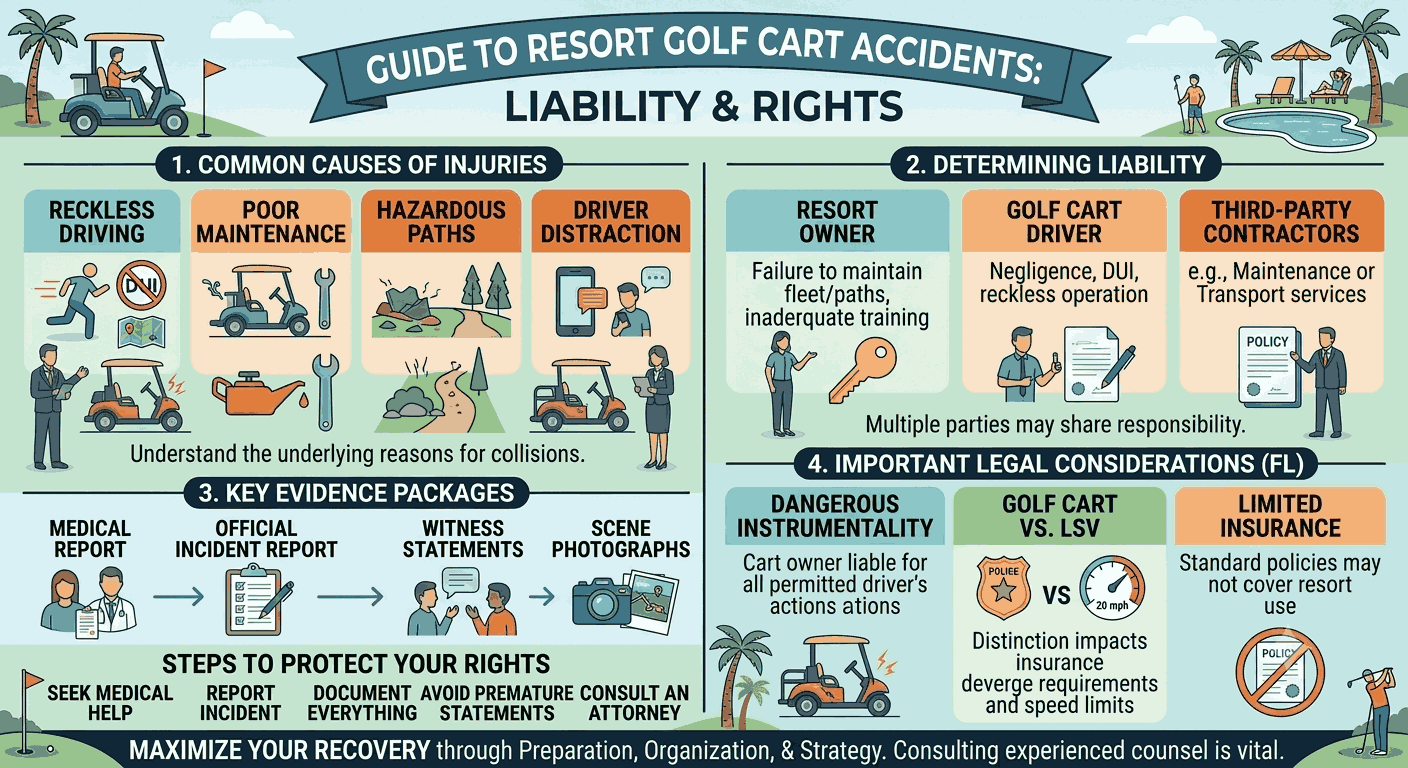
Golf cart accidents in resort settings often stem from factors that go beyond simple driver error. Common issues include:
-
Unsafe Operational Practices: This includes excessive speed on narrow or uneven paths, failure to yield to pedestrians, or overcrowding the vehicle.
-
Poor Maintenance: Resorts are responsible for ensuring their fleet is safe; failing to maintain brakes, steering, or proper lighting can lead to avoidable crashes.
-
Hazardous Environmental Conditions: Accidents may occur due to inadequate signage, poor lighting in low-visibility areas, or debris on internal resort paths.
-
Driver Inattention: As with any vehicle, distracted or intoxicated operation significantly increases the risk of a collision.
Determining Liability
Determining who is responsible for a golf cart accident can be complex, as multiple parties may be involved. Potential liable parties include:
-
The Resort or Hotel Owner: If the accident resulted from poorly maintained equipment, unsafe property conditions, or a failure to train staff, the resort may bear responsibility.
-
The Driver: If the operator was reckless, speeding, or driving under the influence (DUI), they may be held directly responsible for injuries. Note that in Florida, driving a golf cart under the influence carries penalties similar to operating a motor vehicle.
-
Third-Party Contractors: If the resort uses a third-party service for guest transportation or cart maintenance, that contractor might also share liability.
-
Manufacturers: If a mechanical failure, such as a steering collapse or brake failure, caused the accident, the manufacturer could be held liable under product liability laws.
Steps to Protect Your Rights After an Accident
If you are involved in an accident, taking immediate action is essential for both your health and your potential legal claim:
-
Seek Medical Attention Immediately: Even if you feel “fine,” some injuries may not show symptoms right away. A prompt medical evaluation provides an unbiased record of your injuries.
-
Report the Incident: Notify resort management or security and ensure an official incident report is filed.
-
Document Everything: Take photographs or videos of the golf cart, the scene of the accident, any visible injuries, and the surrounding conditions.
-
Gather Evidence: Collect the names and contact information of any witnesses and the driver involved.
-
Avoid Recorded Statements: Be cautious about providing statements to insurance adjusters or signing liability waivers before consulting with a qualified legal professional.
Important Legal Considerations
In Florida, golf carts and Low-Speed Vehicles (LSVs) are treated differently under the law. Additionally, Florida’s “dangerous instrumentality doctrine” can hold cart owners liable for the actions of anyone they permit to operate the vehicle. Because insurance coverage for golf carts can be limited—and many standard homeowners’ policies may not apply off-premises—it is vital to understand what insurance protections are in place during your stay. If you or a loved one has been injured at a resort, consider contacting a personal injury attorney who understands the nuances of golf cart accident claims to help you navigate the complexities of insurance and liability.
References
-
Florida Department of Highway Safety and Motor Vehicles. Golf Carts, Low Speed Vehicles and All-Terrain Vehicles.
-
The Florida Senate. Section 320.01(22), Florida Statutes.
-
Florida Supreme Court. Dangerous Instrumentality Doctrine Precedents.
