
When you are involved in a standard automobile accident, the insurance claim process follows a highly predictable, state-mandated path. However, filing a golf cart accident claim is rarely as straightforward. Because golf carts frequently move between private resort paths, master-planned residential streets, and public golf courses, determining who pays for your medical bills and property damage can turn into an uphill battle.
Insurance providers routinely search for loopholes, attempting to pass the buck between homeowners policies, standard auto insurance, and specialized recreational riders.
To ensure you don’t get left holding the bill for an accident that wasn’t your fault, follow this clear, step-by-step roadmap to file your golf cart accident claim successfully.
Step 1: Seek Immediate Medical Treatment
Your physical well-being is the top priority, but prompt medical care is also the single most critical piece of evidence in an injury claim.
-
Establish a Direct Legal Link: Adrenaline can easily mask serious internal injuries, soft-tissue strains, or concussions caused by a golf cart rollover or ejection.
-
Prevent Adjuster Denials: If you delay going to an emergency room or urgent care center by even a few days, the insurance company will aggressively argue that your injuries were either exaggerated or occurred in an unrelated incident after the crash.
Every medical record, diagnostic scan, and physician note created immediately after the accident serves as an official, unassailable link tying your trauma directly to the collision.
Step 2: Call the Police or Property Management
Never agree to settle a golf cart crash with a simple handshake or an informal cash offer. To hold an insurance carrier accountable, you need an unbiased, official third-party record of the event.
-
On Public Roads or Sidewalks: Call local law enforcement to the scene immediately. Request that an officer file a formal police accident report.
-
On Private Property (Resorts, Country Clubs, HOAs): If the crash occurs on a golf course or within a private community, immediately notify the manager on duty. Demand that they complete an official Premises Incident Report and secure a physical copy before you leave.
[Crash Occurs] ──> [Call Police / Notify Resort Management] ──> [Official Incident Report Generated] ──> [Insurers Bound to Facts]
Step 3: Gather Comprehensive Scene Evidence
Before the golf cart is towed or the debris is cleared, turn your smartphone into an evidence-gathering tool. Collect as much visual data as possible:
-
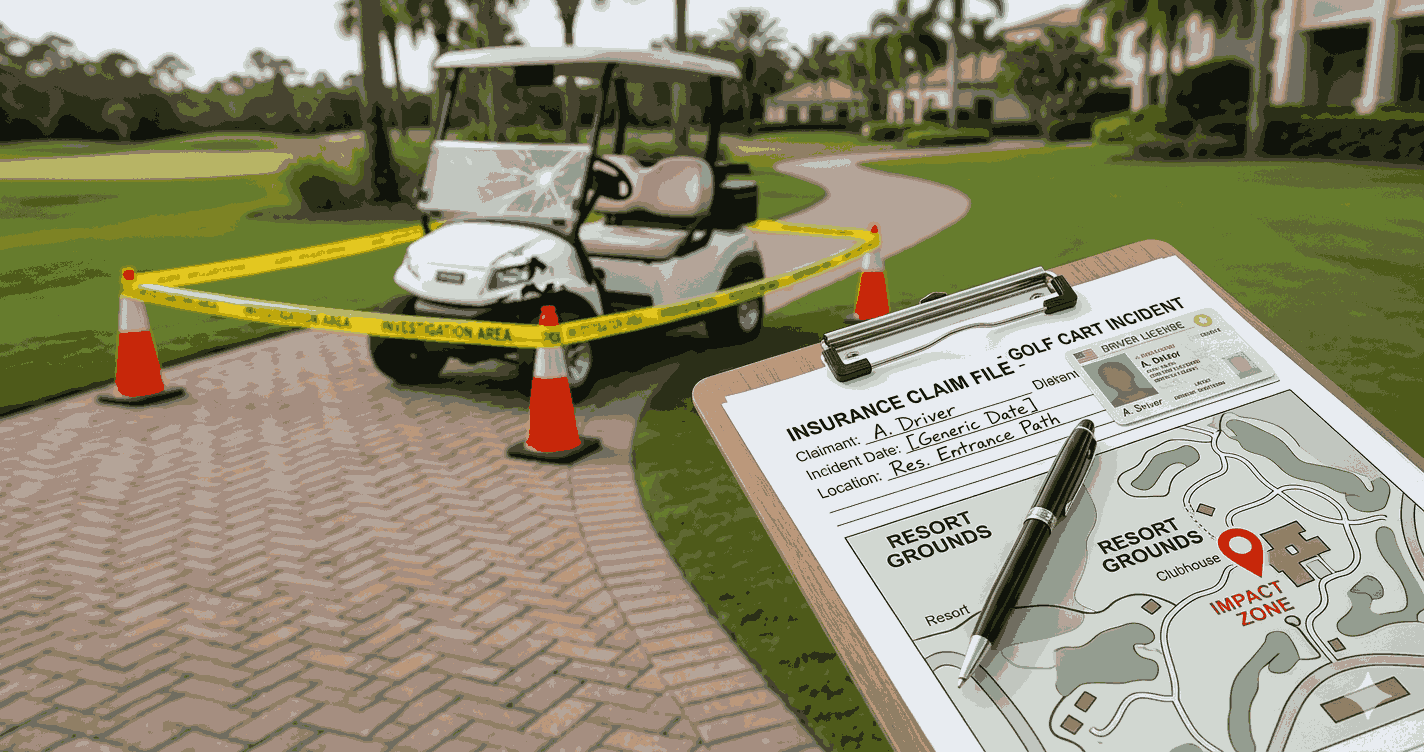
The Vehicles: Take close-up and wide-angle photos of the damage to the golf cart (e.g., dented fiberglass, cracked windshields, broken frames) and any traditional automobiles involved.
-
The Surrounding Environment: Photograph potholes, crumbling path infrastructure, overgrown blind corners, or missing safety signage that may have contributed to the crash.
-
The Aftermath: Document tire skid marks, scattered debris fields, and any physical injuries you or your passengers sustained.
-
Witness Information: Collect names, phone numbers, and brief statements from anyone who saw the collision occur.
Step 4: Identify All Applicable Insurance Policies
This is where golf cart claims diverge wildly from traditional car accidents. Because standard car insurance often excludes golf carts, you must investigate multiple insurance pathways to uncover where the coverage lies:
Standalone Golf Cart / RV Insurance
If the at-fault cart owner has a dedicated recreational vehicle or specialty golf cart policy, this is the cleanest route. These policies mimic auto insurance, offering bodily injury and property damage liability coverage specifically for off-road or low-speed vehicles.
Commercial General Liability (CGL)
If you were struck by a resort-owned cart driven by a distracted employee, or if an unmaintained, hazardous country club path caused your cart to flip, the property owner’s commercial insurance policy can be held liable for your damages.
Homeowners Insurance
If the accident occurred strictly within the private property boundaries of the cart owner’s home, their homeowners liability policy might apply. However, keep in mind that the vast majority of homeowners policies completely deny coverage the exact second a cart drives onto a public road or neighborhood sidewalk.
Traditional Auto Insurance
If a regular car or truck struck your golf cart on a public street, you will file a claim directly against the negligent driver’s standard automobile insurance policy.
Step 5: File Your Claim and Protect Your Rights
Once you have identified the target insurance carrier, you will formally open a claim. Shortly after, a claims adjuster will contact you. It is vital to remember that the adjuster works for the insurance company’s bottom line, not your recovery.
-
Decline Recorded Statements: You are not legally obligated to provide a recorded statement immediately. Adjusters use carefully worded, open-ended questions designed to make you downplay your injuries or accidentally admit fault. Politely inform them that you will provide a written statement once your medical treatment is complete.
-
Reject the “Quick Lowball” Offer: Insurers often try to settle golf cart claims quickly by offering a small cash payout within weeks of the crash. In exchange, you must sign a liability waiver releasing them from future claims. Never sign a release until you know the true, long-term cost of your medical rehabilitation.
Why You Need a Legal Expert in Your Corner
Because golf carts occupy a legal gray area, insurance companies routinely exploit the confusion between homeowners and auto policies to issue blanket denials. An experienced personal injury lawyer knows how to cut through the corporate finger-pointing, subpoena hidden maintenance logs or surveillance footage, and aggressively negotiate to ensure your medical bills and financial losses are paid in full.
Are you currently dealing with an insurance adjuster over a golf cart accident claim? Have you hit a wall with a policy exclusion? Drop your questions or share your experiences in the comments below, and share this guide to help keep your community protected!
References
-
Insurance Information Institute (III) (2025). Claims protocols and liability determinations for non-traditional and low-speed recreational vehicles.
-
Journal of Personal Injury Litigation (2024). Navigating the intersection of homeowners and auto policy exclusions in golf cart crashes.
-
National Association of Insurance Commissioners (NAIC) (2026). Best practices for evidence collection and demand package structuring in multi-policy injury claims.
