

Receiving a notice that your insurance claim has been denied following a golf cart accident is an incredibly stressful experience. When you are already managing physical pain and mounting financial pressures, a denial can feel like a secondary injury. However, a denial is rarely the final word, but rather the beginning of a negotiation. By understanding the core variables of your claim and the steps to challenge a rejection, you can effectively advocate for your recovery.
The Core Building Blocks of an Injury Claim
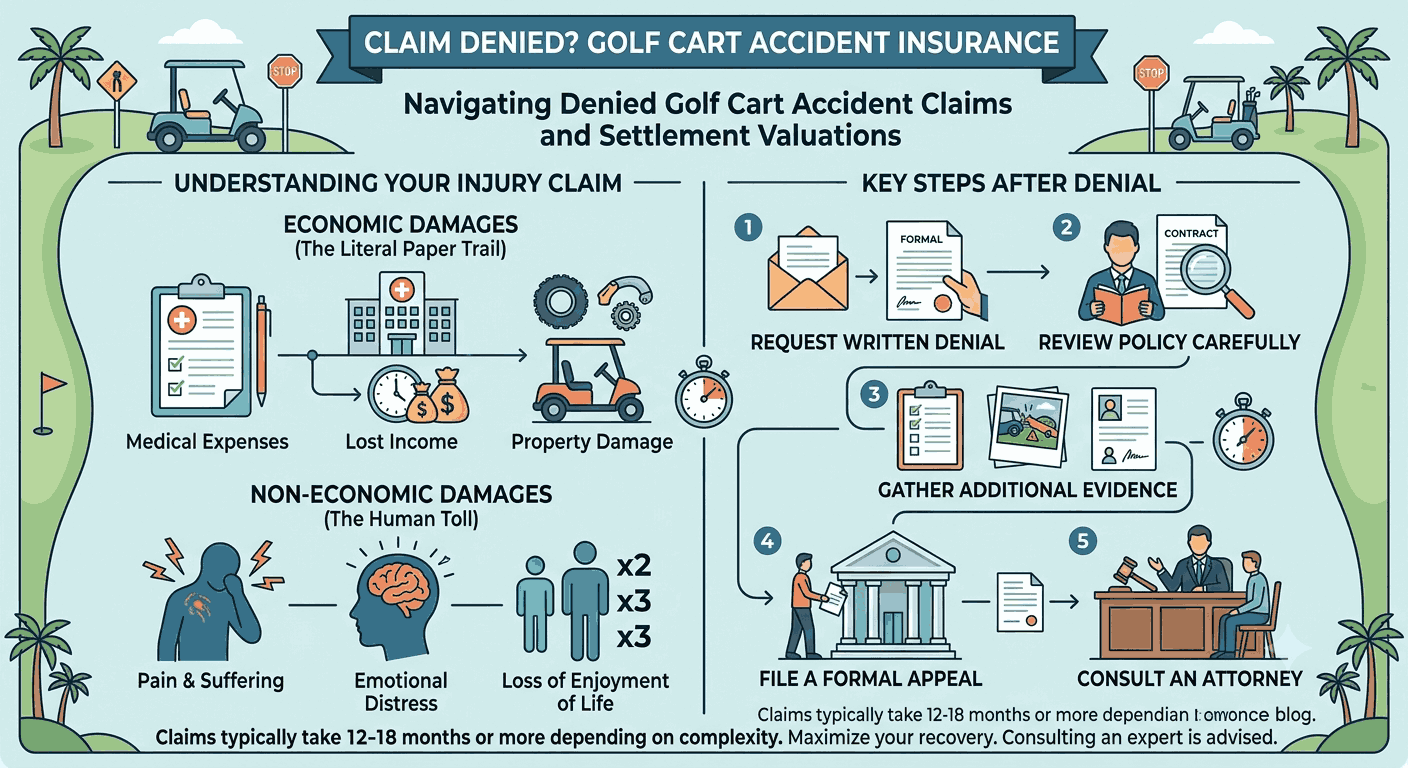
Insurance companies look at your life through a magnifying glass, dividing your losses into two distinct categories: economic and non-economic damages.
Economic Damages (The Literal Paper Trail)
Economic damages represent concrete, quantifiable financial losses. These are the easiest to calculate because they come with receipts and invoices:
-
Immediate Medical Treatment: This covers initial emergency room visits, ambulance transport fees, X-rays, CT scans, and diagnostic lab work.
-
Ongoing Rehabilitation: This includes future surgeries, specialized doctor visits, physical therapy sessions, and durable medical equipment like crutches, braces, or wheelchairs.
-
Lost Income and Wages: You can claim every dollar of income lost because your injuries kept you out of the office, including drained paid time off (PTO) or sick leave.
-
Property Damage Costs: These are the expenses required to fix or replace your personal golf cart, expensive clubs, smartphones, or other electronics destroyed in the wreck.
Non-Economic Damages (The Human Toll)
Non-economic damages compensate you for the intangible impact the crash has had on your daily existence. Insurance adjusters usually take your total economic damages and multiply them by a variable number—typically between 1.5 and 5—based on how much your lifestyle was disrupted.
-
Physical Pain and Suffering: This accounts for the daily physical discomfort and agony caused by your injuries and medical procedures.
-
Emotional Distress and Trauma: This covers the sudden onset of driving anxiety, insomnia, or post-traumatic stress following a violent rollover.
-
Loss of Enjoyment of Life: This reflects your inability to play golf, pick up your grandchildren, or participate in regular hobbies.
-
Permanent Disfigurement: This addresses the long-term impact of surgical scars, limp development, or severe friction burns.
Pivotal Variables That Can Drastically Alter Your Payout
Even if your claim is accepted, several hidden moving parts control the financial boundaries of your personal injury claim.
-
Extent and Permanence of Injury: Golf carts lack structural safety features like airbags, meaning collisions often result in catastrophic injuries like traumatic brain injuries (TBIs), shattered bones, or spinal cord damage, which drive settlement values up to accommodate lifetime care.
-
Available Insurance Policy Limits: An entry-level policy acts as a strict ceiling on your payout. If your damages exceed these limits, an experienced lawyer will hunt for alternative coverage like umbrella policies or corporate liability layers.
-
Comparative Negligence Rules: Most jurisdictions use comparative fault systems. If you are found partially responsible for the crash, your final settlement payout will be reduced by your percentage of fault.
How to Challenge a Denied Claim
If you receive a denial, you can fight back by being organized and deliberate.
-
Request a Written Denial: Demand a formal letter that cites the specific policy language used to justify the rejection.
-
Review Your Policy: Thoroughly examine your documents to determine if the insurer’s interpretation of coverage exclusions is accurate.
-
Build a Comprehensive Evidence Package: Supply the “missing pieces” that caused the denial, such as police reports, photos of the scene, witness statements, or supplemental medical records.
-
Submit a Formal Appeal: Use the company’s internal appeals process to submit your new evidence in writing, keeping your tone professional and factual.
-
Document All Communications: Keep a log of every call, email, and letter. Follow up every phone conversation with an email summary to verify what was discussed.
When to Seek Professional Legal Help
Insurance companies employ small armies of adjusters whose job is to minimize payouts. Consider consulting an attorney if:
-
Liability is disputed;
-
The case is complex (e.g., involving a resort, an HOA, or a manufacturer);
-
You suspect “bad faith” in the insurer’s handling of your claim;
-
The statute of limitations is approaching, as missing these deadlines can forfeit your right to compensation.
Are you currently fighting an insurance provider over an unfair denial or settlement offer? Let us know your story or ask your questions in the comments below, and share this article across your local neighborhood groups to help your community stay informed!
References
-
American Association for Justice (2026). Insurance Bad Faith: Understanding Your Rights When Claims Are Unfairly Denied.
-
FindLaw (2026). The Statute of Limitations for Personal Injury Claims by State.
-
Understanding Golf Cart Accident Settlements and Values (2026).
