

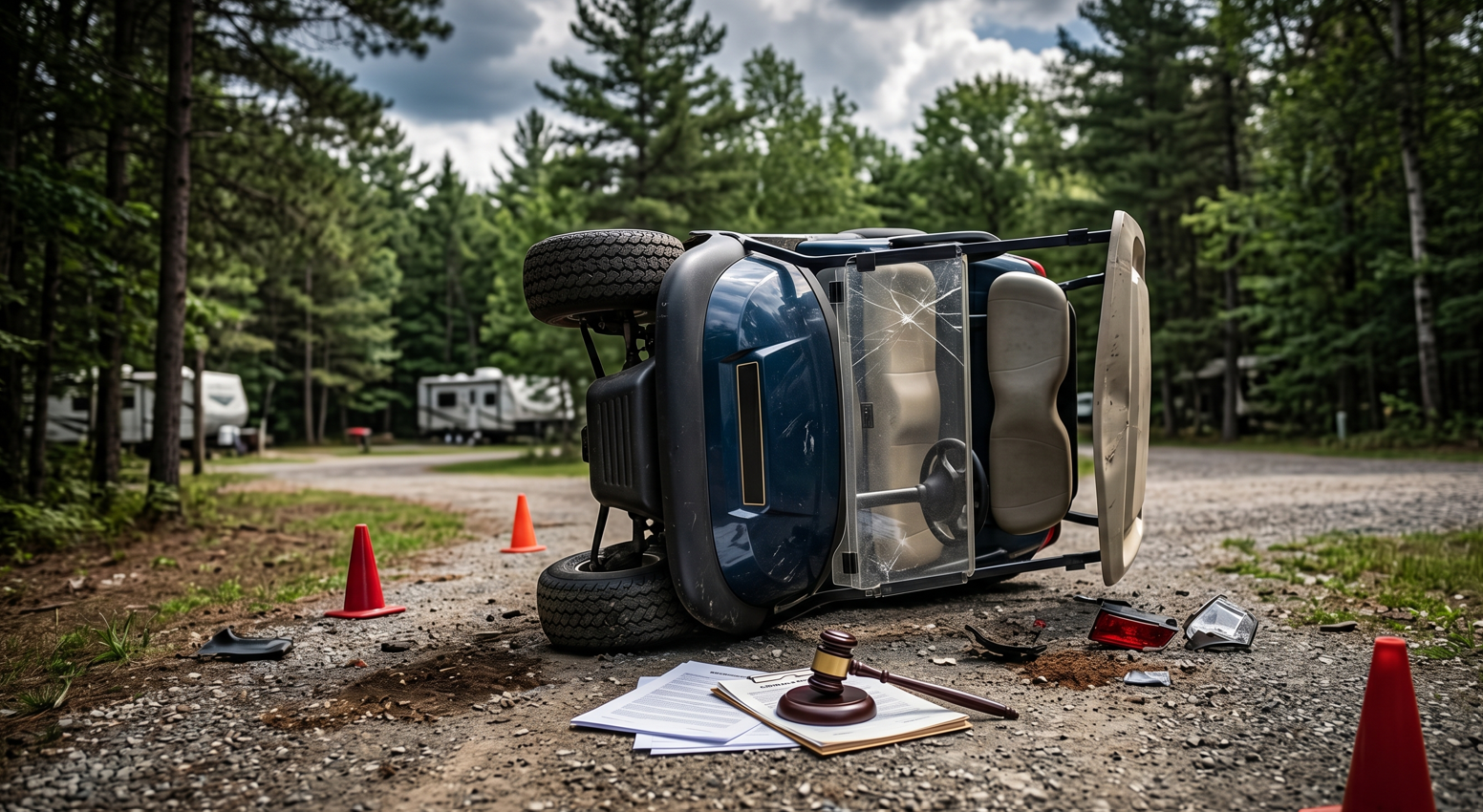
Golf cart accident at campground safety and claims guide
Introduction
A golf cart accident at a campground can happen when you least expect it. Campgrounds are meant for relaxation, family time, and outdoor fun, but golf carts are often used for transport inside these areas. That mix of pedestrians, vehicles, uneven terrain, and sometimes low lighting creates real safety risks.
Even at slow speeds, golf carts can cause injuries when something goes wrong. People may fall, get hit, or suffer injuries due to sudden turns or poor road conditions. Understanding how these accidents happen and what usually follows can help you stay informed and prepared.
This guide explains campground golf cart accidents in a simple, clear way. It covers causes, injuries, responsibility, safety steps, and what people usually do after an incident.
Why golf carts are common in campgrounds
Campgrounds often use golf carts because they are practical and easy to move around in outdoor spaces.
They are commonly used for:
- Transporting guests and staff
- Carrying camping gear or supplies
- Security patrols
- Maintenance work
- Emergency response inside the campground
Their small size makes them ideal for narrow paths and natural environments. But that same simplicity also creates safety challenges.
Common causes of golf cart accidents at campgrounds
Golf cart accidents usually happen due to a mix of human behavior, environment, and equipment conditions.
Driver mistakes
Many accidents happen because of:
- Distracted driving
- Speeding on uneven paths
- Sharp turns on dirt roads
- Lack of experience operating carts
Even a small mistake can lead to a fall or collision.
Uneven terrain
Campgrounds are not like paved roads. They often include:
- Gravel paths
- Dirt tracks
- Slopes and hills
- Rocky or muddy surfaces
These conditions make it harder to control a golf cart safely.
Poor lighting
Nighttime use increases risk significantly. Low visibility can lead to:
- Missing obstacles
- Not seeing pedestrians
- Misjudging turns
Overloading the cart
Golf carts have weight limits. When too many people or heavy items are added, the cart becomes unstable.
Mechanical problems
Sometimes accidents happen due to:
- Brake failure
- Steering issues
- Tire damage
- Battery or electrical faults
Poor maintenance increases risk in outdoor environments.
Injuries that can happen in campground golf cart accidents
Even though golf carts are slow, injuries can still be serious depending on the situation.
Head injuries
Falls or collisions can cause concussions or head trauma, especially if passengers are not seated properly.
Broken bones
Arms, wrists, and legs are commonly affected during sudden stops or rollovers.
Sprains and soft tissue injuries
Twisting movements during accidents often lead to muscle and ligament injuries.
Back and neck injuries
Sudden jolts or uneven terrain impacts can cause long-term discomfort or spinal strain.
Cuts and bruises
Sharp objects or rough ground surfaces can cause visible injuries.
Who may be responsible for a campground golf cart accident
Responsibility depends on how and why the accident happened.
Campground management
They may be responsible if:
- Paths are unsafe
- Lighting is poor
- Safety rules are not enforced
- Golf carts are poorly maintained
Golf cart operator
If the driver acted carelessly, they may share responsibility.
Equipment provider
If a mechanical failure caused the accident, the company responsible for maintenance or supply may be involved.
What to do after a golf cart accident at a campground
After an accident, people often feel confused or shaken. Taking simple steps can help.
Step 1 Get medical attention
Even if injuries seem small, it is important to get checked. Some injuries appear later.
Step 2 Report the incident
Inform campground staff so an official record is created.
Step 3 Gather basic information
If possible, collect:
- Photos of the area
- Details of the cart
- Witness names
- Time and location
Step 4 Keep medical records
All treatment documents should be saved carefully.
Step 5 Avoid guessing fault
Stick to facts when describing the accident.
Why evidence matters in these cases
Evidence helps explain what happened and supports any claim or report.
Useful evidence includes:
- Accident reports from campground staff
- Photos or videos
- Medical records
- Witness statements
- Maintenance logs
Clear documentation makes it easier to understand responsibility.
How insurance may be involved
Most campgrounds carry insurance coverage for guest injuries and property incidents. Insurance companies usually review:
- Accident details
- Injury reports
- Witness accounts
- Safety conditions
They decide compensation based on responsibility and policy terms.
Challenges in campground golf cart accidents
These cases can be complicated because:
Multiple factors are involved
Terrain, weather, and human behavior all play a role.
Shared responsibility is common
More than one party may be responsible.
Limited documentation
Remote campground areas may not have cameras or detailed records.
Safety tips for golf carts in campgrounds
Simple precautions can reduce risk:
- Stay seated while moving
- Follow posted rules
- Avoid overcrowding carts
- Drive slowly on uneven paths
- Use lights at night if available
- Do not use carts under unsafe conditions
Small habits make a big difference in outdoor environments.
Importance of acting quickly
After an accident, timing matters. Quick action helps:
- Preserve evidence
- Record accurate details
- Support medical documentation
- Prevent loss of witness information
Delays can make it harder to understand what really happened.
EEAT perspective on safety information
Good safety information should be:
- Based on real-world conditions
- Clear and easy to understand
- Focused on practical steps
- Free from exaggeration or assumptions
This helps readers make informed decisions in real situations.
Frequently asked questions
Are campground golf cart accidents common
They are not rare, especially in busy or large outdoor areas.
Can passengers get injured easily
Yes, especially if they are not seated properly or the cart is overloaded.
Do campgrounds have safety rules
Most campgrounds do, but enforcement varies.
Should minor injuries be checked
Yes, because some injuries worsen over time.
Conclusion
A golf cart accident at a campground can happen quickly and unexpectedly. While these vehicles are helpful and commonly used, they still require careful operation and safe surroundings.
Understanding the causes, risks, and safety steps helps reduce confusion after an incident and improves awareness in outdoor environments. Campgrounds, drivers, and guests all share responsibility in keeping these spaces safe.
Call to action
Share this article to help others stay informed about campground safety, and leave a comment if you want more clear guides on accident topics.
