
Navigating a Golf Cart Accident Lawsuit Smoothly
Golf carts are no longer just for the fairway. Today, you see them buzzing through retirement communities, beach towns, and suburban neighborhoods. They are fun, convenient, and feel completely harmless.
However, because these vehicles often lack standard automotive safety features like airbags, doors, and complex restraint systems, accidents can lead to surprisingly severe outcomes.
If you or a loved one suffered injuries in a collision, understanding the legal landscape is the first step toward recovery. Let’s break down the legal process clearly and logically, ensuring you know exactly what to expect from start to finish.
Why Golf Cart Collisions Happen and Who Cares
Many people treat golf carts like toys, which introduces unique risks to public roads and private courses alike. According to long-term data tracked by the Consumer Product Safety Commission (CPSC), approximately 15,000 golf cart-related injuries require emergency room treatment every single year in the United States.
The dynamics of these vehicles create specific legal and medical challenges:
-
High Center of Gravity: Golf carts can easily roll over if driven over uneven terrain or turned sharply.
-
Ejection Risks: Studies indicate that roughly 40% of golf cart accidents involve a passenger falling or being thrown from the vehicle, frequently leading to severe head injuries or fractures.
-
Lack of Structural Protection: Without a steel frame, bumpers, or crumple zones, occupants absorb the direct force of an impact.
When an incident occurs on a street, a resort property, or a golf course, it is rarely just a matter of bad luck. Usually, someone’s negligence caused the crash. Proving that negligence is the foundation of any personal injury claim.
The Initial Steps of a Golf Cart Injury Claim
The actions you take immediately following a collision dictate the strength of your eventual lawsuit. Insurance companies look for any gaps in medical treatment or documentation to devalue your claim.
1. Prioritize Medical Documentation
Even if you feel fine, seek a medical evaluation immediately. Adrenaline can mask internal damage, soft tissue strains, and concussions. Establishing a direct, timely medical record links your physical injuries directly to the timeline of the accident.
2. Gather Evidence at the Scene
If you are physically able, treat the area like a standard car accident scene:
-
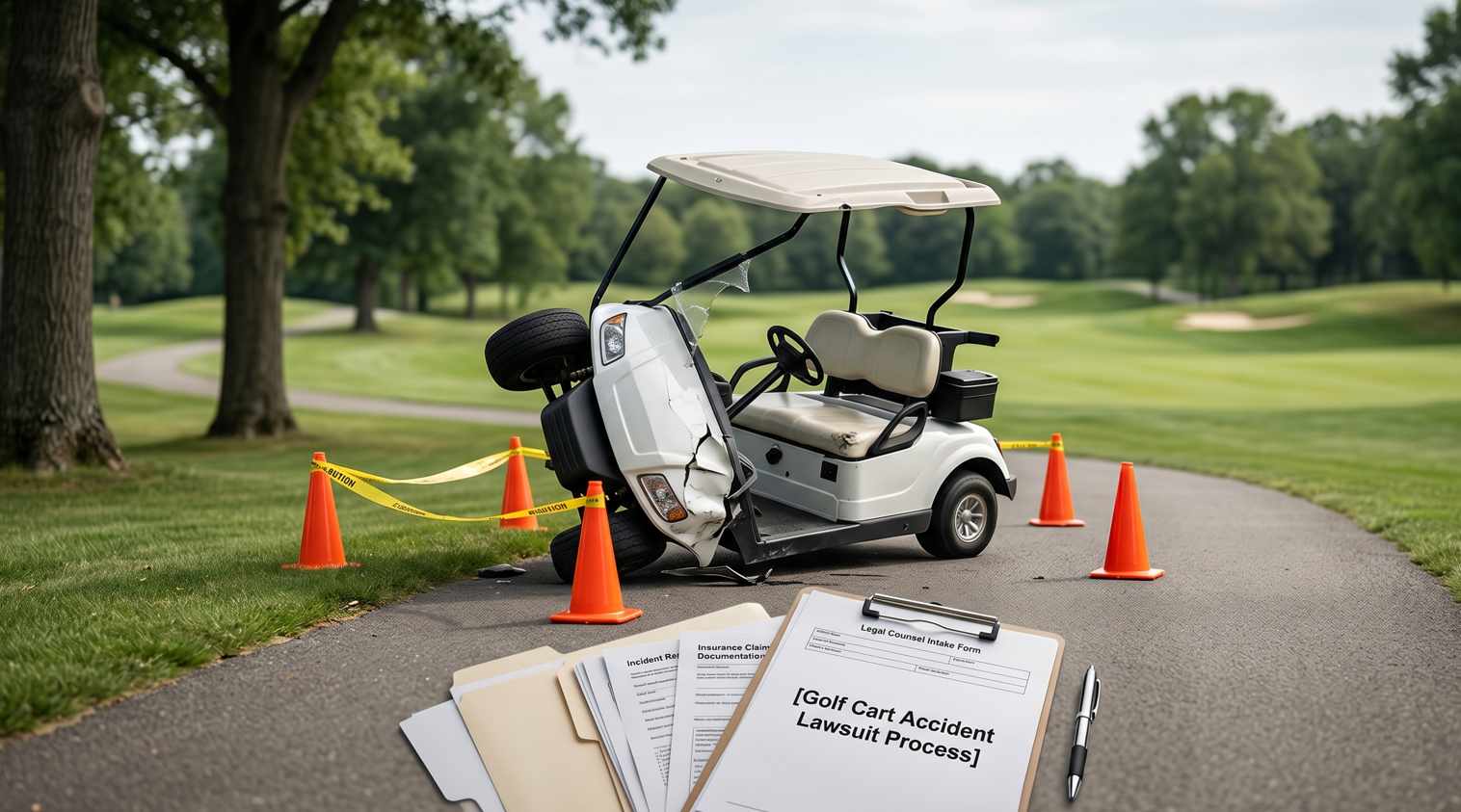
Take photographs of the cart damage, the surrounding terrain, and visible road conditions.
-
Collect contact information from any eye-witnesses.
-
Request a copy of the police report or property incident report.
Identifying the Right At Fault Parties
Determining liability in a golf cart accident is rarely simple because multiple parties can share the blame. Your attorney will investigate the circumstances to pinpoint who is financially responsible for your damages.
| Responsible Party | Common Liability Scenarios |
| The Cart Operator | Driving under the influence, speeding, making reckless sharp turns, or overloading the vehicle. |
| The Property Owner / Course | Failing to maintain cart paths, leaving hidden hazards unmarked, or serving excessive alcohol to guests. |
| The Maintenance Company | Neglecting routine brake checks, steering calibration, or tire replacements on rental fleets. |
| The Manufacturer | Distributing vehicles with inherent design defects or failing to install essential safety alerts. |
For example, in late 2025, Yamaha recalled over 19,000 model year 2021-2025 golf cars via the CPSC due to a complete lack of stoplights, which created severe crash hazards. If a manufacturer sells a defective fleet, they can be held strictly liable for the resulting harm.
Step by Step Through the Lawsuit Process
Filing a formal personal injury lawsuit involves a highly regulated sequence of events. While most cases settle before ever seeing a courtroom, you must prepare for each phase to protect your right to fair compensation.
Keep an Eye on the Clock: Every state enforces a strict “statute of limitations,” which is the legal deadline to file your lawsuit. For example, states like Florida grant victims exactly two years from the date of the accident to initiate a personal injury lawsuit. Missing this window bars you from recovering compensation permanently.
Calculating Your True Financial Recovery
Insurance adjusters notoriously try to offer quick, low-ball settlements right after an accident. They hope you accept a small check before realizing the full scope of your medical needs. A comprehensive claim evaluates both current and future financial losses.
Economic Damages (Tangible Losses)
These are out-of-pocket costs that come with clear receipts and bills:
-
Medical Expenses: ER bills, surgeries, physical therapy sessions, and future diagnostic imaging.
-
Lost Wages: Income you missed out on while recovering in the hospital or at home.
-
Property Damage: The cost to repair or replace your personal property or your own cart.
Non-Economic Damages (Intangible Losses)
These compensate you for the subjective, human impact of the crash:
-
Physical pain and ongoing discomfort.
-
Emotional trauma, anxiety, or post-traumatic stress.
-
Loss of enjoyment of life or inability to participate in hobbies.
Actionable Tips for a Stronger Case
Navigating the insurance world is tough, but you can avoid common pitfalls by staying organized and disciplined.
-
Do Not Post on Social Media: Insurance companies actively monitor your public profiles. A simple photo of you smiling at a family dinner can be twisted to argue that you are not actually in pain.
-
Keep a Daily Pain Journal: Document your physical limitations, pain levels, and how the injuries disrupt your daily routine. This provides powerful evidence of your non-economic damages.
-
Never Give a Recorded Statement Alone: Adjusters phrase questions carefully to trick you into admitting partial fault. Let your lawyer handle all direct communication.
Frequently Asked Questions
Does regular auto insurance cover golf cart accidents?
Generally, standard auto insurance policies exclude vehicles with fewer than four wheels or those not explicitly designed for highway use. You typically need specialized golf cart insurance, an umbrella policy, or homeowner’s insurance endorsements to secure coverage.
Can I sue if I was a passenger in the cart?
Yes. If the cart operator drove recklessly, or if another vehicle struck you, you have a right to file a claim against the liable party’s insurance to pay for your medical bills.
What if I am partially at fault for the crash?
Many jurisdictions follow comparative negligence laws. This means you can still recover compensation even if you contributed to the accident, though the court reduces your final payout by your percentage of fault.
Have you or someone you know had to deal with an insurance company after an unexpected neighborhood cart collision?
Comment your thoughts below to share your experience, or share this article with friends and neighbors to keep your local community safe and informed!
