

How Long Does a Golf Cart Lawsuit Take to Resolve
Golf carts are no longer just for the back nine. Today, you see them buzzing around retirement communities, beach resorts, and suburban neighborhoods. While they offer a fun and convenient way to get around, they lack the structural protection of standard cars. When a collision happens, the resulting injuries can be severe, leading victims to wonder about their legal options and timelines.
If you find yourself injured in an accident, your first question after seeking medical care is often: how long will this legal process take?
The short answer is that a golf cart lawsuit can take anywhere from a few months to several years. Because every accident involves unique details—ranging from the severity of your injuries to the willingness of the insurance company to cooperate—there is no single timeline. Understanding the variables that move the needle can help you navigate the process with realistic expectations.
Timeline of a Golf Cart Accident Claim
A legal claim moves through several distinct phases. Knowing what happens at each stage helps eliminate the anxiety of the unknown.
The Immediate Aftermath and Investigation (Weeks 1 to 4)
The clock starts the moment the accident occurs. The initial weeks focus entirely on gathering evidence to build a foundation for your case. Your legal team will collect:
-
Police or security reports from the resort or community.
-
Eyewitness statements and contact details.
-
Surveillance footage or photos of the scene.
-
Medical records detailing your initial emergency care.
Maximum Medical Improvement (Months 1 to 6+)
You cannot accurately value a lawsuit until you know the total cost of your injuries. Attorneys advise waiting until you reach Maximum Medical Improvement (MMI). MMI means your condition has stabilized as much as doctors expect it to. Evaluating a claim before reaching MMI risks leaving money on the table if you require unexpected future surgeries or physical therapy.
Demand Letter and Insurance Negotiations (Months 2 to 4 post-MMI)
Once your medical trajectory is clear, your lawyer sends a formal demand letter to the at-fault party’s insurance company. This document outlines the facts of the accident, details your damages, and requests a specific settlement amount. The insurance company typically has 30 days to respond with an acceptance, a counteroffer, or a denial.
Settlement vs Trial in a Golf Cart Accident Case
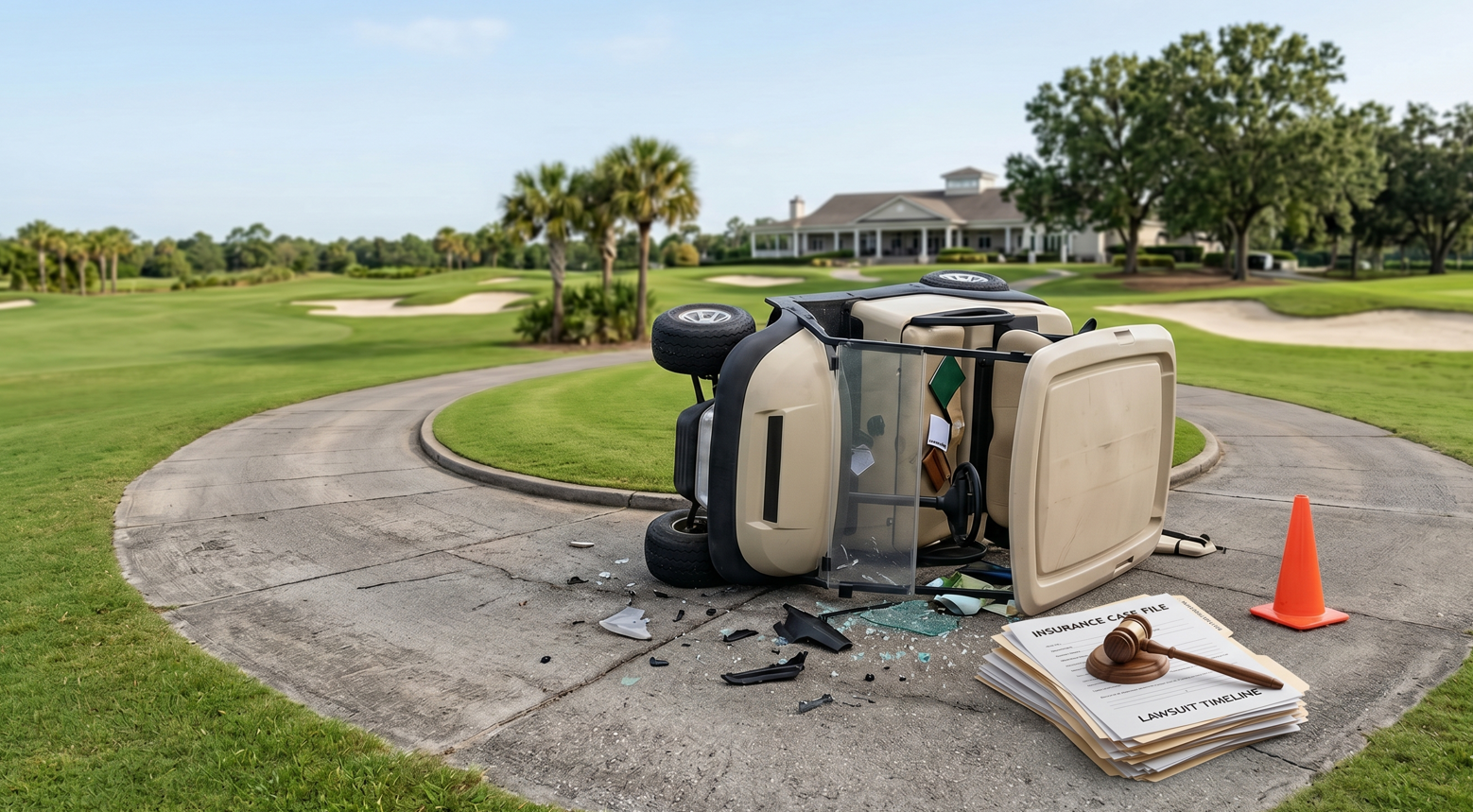
As shown in watermarked_img_512017759650879323.png, a damaged cart on a path often leaves a trail of paperwork, leading directly to a critical fork in the road: settling out of court or taking the case to trial.
Resolving Your Case Through a Settlement
The vast majority of personal injury cases wrap up during the settlement phase. A settlement occurs when both parties agree on a financial payout without involving a judge or jury.
-
Pros: Faster payout, lower legal fees, guaranteed compensation, and privacy.
-
Cons: The payout may be lower than what a jury might award in a best-case trial scenario.
Taking the Case to Trial
If the insurance company refuses to offer a fair settlement, your attorney may file a formal lawsuit. This moves the case into the litigation phase, significantly extending the timeline.
-
Pros: Potential for a much higher financial award if the jury rules heavily in your favor.
-
Cons: Can add a year or more to the timeline, costs significantly more in court fees, and carries the risk of walking away with nothing if you lose.
Factors That Slow Down Your Lawsuit Timeline
Several hidden bottlenecks can stretch a straightforward insurance claim into a lengthy courtroom battle.
Severe or Complex Injuries
If an accident results in traumatic brain injuries, spinal damage, or broken bones requiring multiple surgeries, your case will naturally take longer. Complex injuries mean prolonged medical treatment, which delays the calculation of total medical expenses and future lost wages.
Disputed Liability
Who caused the crash? In retirement communities or resorts, liability can get murky. If the other party claims you pulled out in front of them, or if a resort argues that a mechanical failure caused the cart to flip, proving fault requires deep investigation. Defending against shared blame takes time.
Multiple Liable Parties
Golf cart accidents often involve more than just two drivers. Depending on the scenario, liability might rest on:
-
The cart owner for negligent entrustment.
-
A rental company or resort for poor vehicle maintenance.
-
The manufacturer if a defective part caused a rollover.
-
The municipality or country club for poorly maintained paths.
When multiple insurance companies get involved, they often spend months pointing fingers at each other before discussing a payout.
How to Speed Up Your Legal Claim
While you cannot control the court calendar or the speed of your physical recovery, you can take proactive steps to prevent unnecessary administrative delays.
1. Seek Immediate Medical Attention
Do not skip the doctor, even if you feel fine initially. Adrenaline can mask pain. Gaps in medical treatment give insurance adjusters an excuse to argue that your injuries were not caused by the accident, stalling your claim.
2. Keep Perfect Records
Organize your documents from day one. Create a folder containing:
-
Every medical bill, prescription receipt, and discharge summary.
-
Pay stubs proving lost wages from missed work.
-
A journal documenting your daily pain levels and limitations.
3. Avoid Social Media Blunders
Insurance adjusters routinely monitor social media accounts. Posting a photo of yourself smiling at a family barbecue while claiming a debilitating back injury can derail settlement negotiations instantly. Keep your case offline.
What to Expect If Your Case Goes to Court
If negotiations stall and your attorney files a lawsuit, the process enters a formal schedule structured by the court system.
| Phase of Litigation | Estimated Timeframe | What Happens |
| Filing & Serving | 1 to 2 Months | Formal complaint filed; defendant is officially served paperwork. |
| The Discovery Process | 3 to 6 Months | Both sides exchange evidence, take depositions, and interview witnesses. |
| Mediation | 1 to 2 Months | A neutral third party tries to help both sides reach an agreement before trial. |
| Trial Preparation & Court Date | 6 to 12+ Months | Waiting for an open slot on the court docket; presenting the case to a jury. |
FAQs About Golf Cart Accident Timelines
Can I settle my claim without a lawyer?
Yes, you can handle minor claims with clear-cut liability on your own. However, if you sustained significant injuries, an experienced attorney can usually secure a significantly higher settlement, even after accounting for legal fees.
Does homeowners insurance cover these accidents?
It depends entirely on the policy and where the accident happened. Standard homeowners insurance sometimes covers accidents occurring directly on your property or a designated golf course path, but they often exclude incidents on public roads.
How long do I have to file a lawsuit?
This timeframe is governed by your state’s statute of limitations. For personal injury claims, this window typically ranges from two to four years from the date of the accident. Missing this deadline permanently bars you from seeking compensation.
Have you or a loved one been injured in a golf cart mishap? Share this article with someone navigating a recovery, or drop your questions in the comments below!
