
Most people view golf carts as harmless, slow-moving vehicles designed for a relaxing day on the fairway. However, as these vehicles transition from golf courses to gated communities, retirement villages, and public streets, a hidden danger is emerging. Golf cart accidents are causing an alarming number of severe head traumas, specifically traumatic brain injuries (TBIs).
Because golf carts lack standard automotive safety features like airbags, doors, and robust roll cages, a sudden turn or minor collision can lead to life-altering health consequences. Understanding how these injuries occur, how to recognize their signs, and how to prevent them can save lives.
Why Golf Carts Pose a Massive Risk for Head Trauma
Golf carts appear stable and safe due to their open design and relatively low top speeds, which typically range between 15 to 24 miles per hour. However, the physics of a golf cart accident tell a completely different story.
The Physics of an Ejection
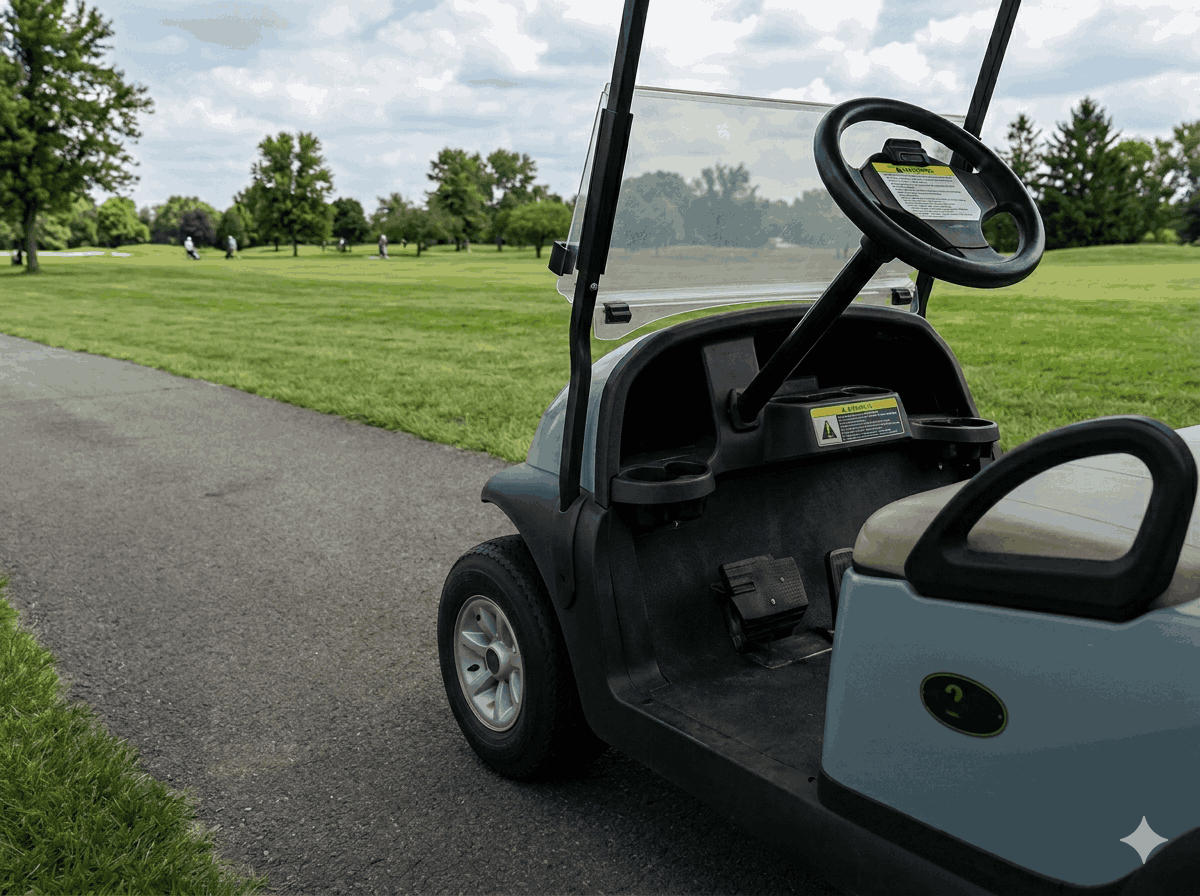
Unlike standard passenger vehicles, traditional golf carts are completely open and rarely feature standard seat belts or doors. When a golf cart makes a sharp turn, centrifugal force naturally pushes the passengers outward. Because the seats are often slick and flat, passengers can easily slide out and hit the pavement or turf headfirst.
A peer-reviewed study published in Surgical Neurology International revealed that ejection from the vehicle is the primary mechanism of injury in 84% of neurosurgical golf cart accidents (Torres-Urquia & De Jesus, 2024). When a human body is thrown from a moving vehicle onto hard asphalt without any structural protection, the head often absorbs the primary impact.
The Hidden Danger for Children
While adults are certainly vulnerable, children and young adolescents face the highest risk. Research highlights that more than 60% of pediatric patients injured in golf cart incidents suffer a traumatic brain injury, a rate that shockingly outpaces head trauma rates in all-terrain vehicle (ATV) crashes (Sincavage & Nance, 2024).
Several distinct factors make younger passengers uniquely vulnerable:
-
Minor Drivers: A substantial portion of pediatric golf cart accidents involve minor drivers, often as young as 13 years old, who lack the reflexes and risk-detection skills required to operate a motorized vehicle safely (Boggs et al., 2025; Grover et al., 2024).
-
Underdeveloped Physical Stability: Children have a higher center of gravity and less upper-body strength to hold onto handrails during sudden turns or sharp braking maneuvers.
-
An Innocent Perception: Parents who would never dream of letting their child ride in a car without a seat belt or a bicycle without a helmet frequently allow them to ride unrestrained in a golf cart. This creates a dangerous safety blind spot.
Common Types of Brain Injuries from Golf Cart Accidents
When the human head hits the ground or a hard component of the vehicle, the sudden deceleration forces the brain to collide with the interior walls of the skull. This mechanical trauma can result in several types of neurological injuries, ranging from mild to life-threatening.
1. Concussions and Mild TBI
A concussion occurs when a sudden impact causes the brain to bounce or twist inside the skull, creating chemical changes and temporary cellular damage. While classified as “mild” because they are rarely immediately fatal, concussions can cause prolonged cognitive, physical, and emotional disruptions.
2. Intracranial Hemorrhage (Brain Bleeding)
A more violent impact can rupture the blood vessels surrounding or within the brain tissue. In neurosurgical cases stemming from golf cart accidents, intracranial hemorrhage is present in roughly 76% of patients, with localized brain contusions, or bruising of the brain tissue, being the most common clinical finding (Torres-Urquia & De Jesus, 2024).
Medical professionals classify these dangerous bleeds into distinct anatomical locations:
| Injury Type | Description | Medical Severity |
| Acute Subdural Hematoma | Blood gathers between the brain covering (dura) and the brain itself, often caused by torn veins from severe acceleration-deceleration forces. Found in 44% of serious golf cart TBIs (Torres-Urquia & De Jesus, 2024). | Critical; often requires emergency surgical decompression to relieve intracranial pressure. |
| Brain Contusion | Microscopic bleeding and bruising of the actual brain tissue, occurring in 64% of neurosurgical cases (Torres-Urquia & De Jesus, 2024). | High; requires close neurological monitoring in an intensive care unit (ICU). |
| Skull Fractures | A literal break or crack in the cranial bone structure, presenting in 80% of severe golf cart head traumas (Torres-Urquia & De Jesus, 2024). | Moderate to High; poses risks of infection and underlying brain tissue laceration. |
Recognizing the Red Flags of a Brain Injury
Identifying a traumatic brain injury immediately after a golf cart accident can be difficult. Adrenaline runs high, and a victim might initially insist that they are perfectly fine. However, some intracranial bleeds develop slowly, causing symptoms to worsen hours or even days after the initial impact.
Critical Medical Advice: If you or a loved one experiences any loss of consciousness, repetitive vomiting, or severe confusion after a golf cart accident, seek emergency medical care immediately. Do not “wait and see.”
Watch for these warning signs, grouped by category:
Physical Symptoms
-
Persistent, worsening headaches
-
Nausea and repeated vomiting
-
Dizziness, loss of balance, or clumsy movements
-
Blurred vision or unequal pupil sizes
-
Clear fluid draining from the nose or ears (a sign of a skull base fracture)
Cognitive and Emotional Symptoms
-
Confusion, disorientation, or slurred speech
-
Difficulty remembering the accident or forming new memories
-
Profound drowsiness or difficulty waking up
-
Unusual irritability, anxiety, or uncharacteristic mood swings
What to Do Immediately Following an Accident
If you witness a golf cart rollover, collision, or passenger ejection, acting quickly and methodically can minimize the long-term impact of a neurological injury.
1.Assess the Environment: Immediate Safety.
Essential Safety Protocols to Prevent Head Injuries
Preventing a traumatic brain injury is vastly easier than recovering from one. Implementing a few common-sense safety measures can eliminate the vast majority of severe golf cart injuries.
-
Install and Wear Seat Belts: While traditional carts lack them, modern low-speed vehicles (LSVs) often include lap and shoulder belts. Utilizing retrofitted seat belts prevents ejection, which is the root cause of most severe head injuries.
-
Enforce Age and Licensing Restrictions: Do not treat a golf cart like a toy. Keep children under the age of 16 off the driver’s seat, and ensure only licensed drivers operate the vehicle.
-
Consider Wearing Helmets: For younger children or when operating a golf cart on public roadways alongside larger passenger vehicles, wearing a helmet drastically reduces the risk of sustaining a closed head injury (Sincavage & Nance, 2024).
-
Reduce Speed on Turns: Drivers must brake before entering a turn rather than during it. Sharp turns at maximum speed are the primary cause of passenger ejections and vehicle rollovers.
-
Keep All Limbs Inside: Passengers should keep both feet flat on the floorboard and hold firmly onto the vehicle’s integrated armrests or handrails at all times while the cart is in motion.
The Long Journey to Recovery and Rehabilitation
Recovering from a traumatic brain injury requires time, patience, and a dedicated team of medical professionals. While some patients recover completely within a few weeks, moderate to severe brain injuries can cause persistent disabilities that require long-term intervention.
The Phases of Medical Recovery
In severe cases involving intracranial bleeding or rising brain pressure, patients may spend weeks in an intensive care unit undergoing specialized neurological monitoring or emergency surgery, such as a decompressive craniectomy (Torres-Urquia & De Jesus, 2024). Once stable, the focus shifts to cognitive and physical rehabilitation.
Comprehensive Rehabilitation Strategies
A holistic recovery plan often utilizes multiple medical disciplines to help patients regain their independence:
-
Physical Therapy: Focuses on restoring gross motor skills, balance, physical strength, and coordination that may have been compromised by damage to the motor cortex.
-
Occupational Therapy: Helps patients relearn everyday activities, such as writing, dressing, feeding themselves, and navigating their home safely.
-
Speech and Language Therapy: Addresses difficulties with speech articulation, word-finding, swallowing mechanics, and high-level cognitive communication skills.
-
Neuropsychology: Provides essential mental health support, helping patients and their families navigate the profound emotional shifts, anxiety, and depression that frequently accompany a structural brain injury.
Ultimately, golf carts offer an incredibly convenient way to navigate communities, but their safety risks must not be ignored. By treating these low-speed vehicles with the same respect and safety caution as any other automobile, we can enjoy their utility without paying an devastating price.
Have you or someone you know ever experienced an accident involving a golf cart? What safety rules do you follow in your community? Let us know your experiences and thoughts in the comments below, and please share this article with your family and neighbors to keep your community safe!
References
Boggs, K., Wortham, A., Gregoski, M. J., Pruitt, C. M., & McDuffie, L. A. (2025). Pediatric golf cart injuries and morbidity: A single-center trauma experience. Pediatric Emergency Care.
Grover, P., Nobari, H., Bhardwaj, M., Mehta, L., Kapoor, G., Chawla, P. A., & Paolo Ardigò, L. (2024). An overview of sports-mediated brain injuries and their management approaches: A narrative review. Human Movement, 25(1), 12–35.
Sincavage, J., & Nance, M. L. (2024). Putting the golf cart before the horse: Pediatric head trauma outpaces education and safety regulations. Trauma Surgery & Acute Care Open, 9(1), e001481.
Torres-Urquia, A., & De Jesus, O. (2024). Golf cart-related neurosurgical injuries. Surgical Neurology International, 15, 222.
