

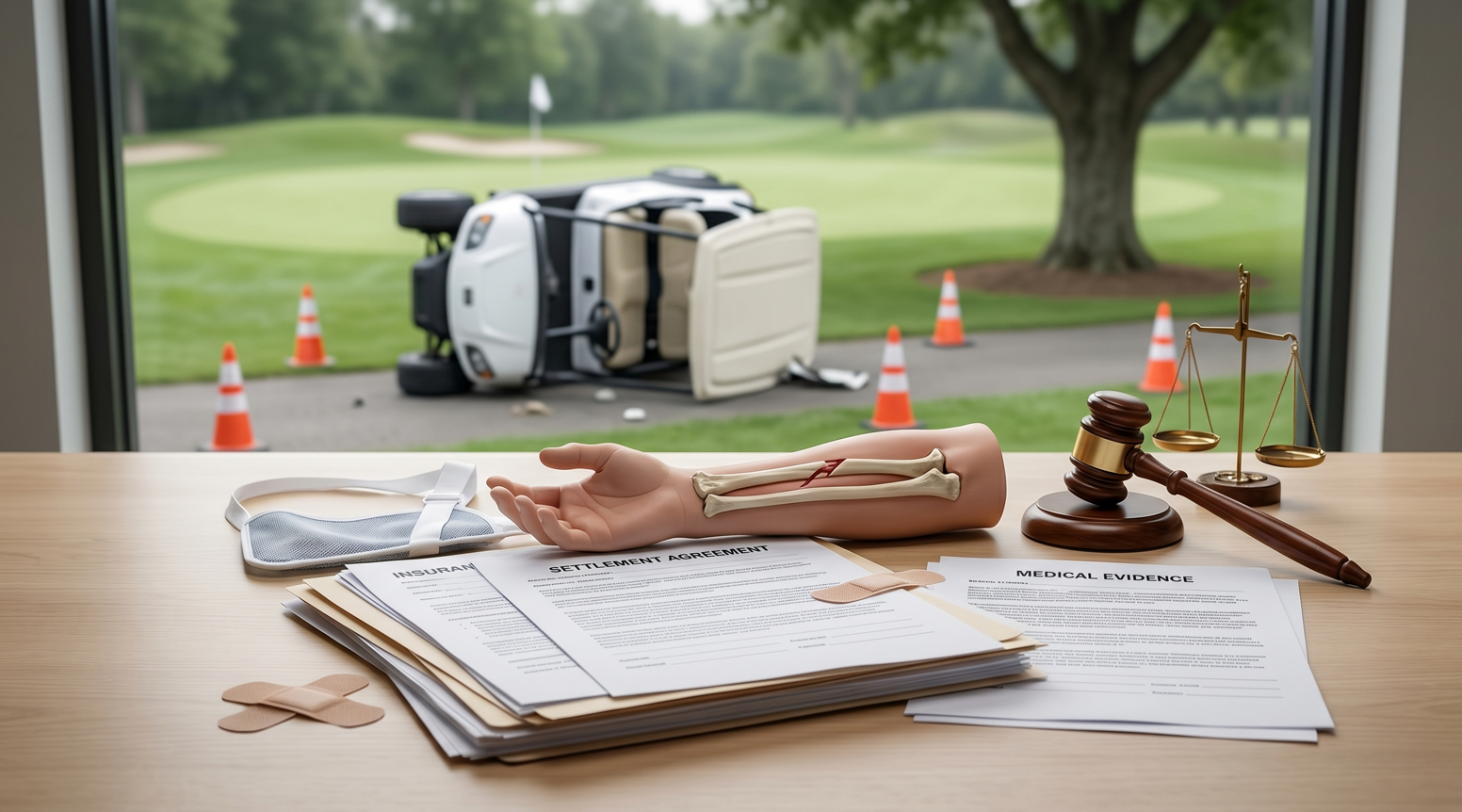
How to Maximize a Broken Arm in Golf Cart Accident Settlement
Golf carts are the unsung heroes of gated communities, sun-drenched resorts, and, of course, the local links. They feel like toys—zippy, open-air, and carefree. But when a sharp turn or a distracted driver leads to a rollover, that “toy” suddenly feels like thousands of pounds of moving metal.
If you are dealing with a broken arm in a golf cart accident settlement, you aren’t just looking for medical bills to be paid. You are looking for a way to get your life back to normal. This guide dives deep into the legal mechanics of these claims to help you navigate the path to fair compensation.
Why Golf Cart Arm Injuries Are Serious Business
A broken arm might sound straightforward, but in the context of a golf cart accident, it rarely is. Because these vehicles lack doors and side-impact protection, passengers often instinctively stick an arm out to brace for a fall or a tip-over.
Common Types of Fractures
-
-
Distal Radius Fracture: Often called a “broken wrist,” this happens when you try to catch yourself during an ejection.
-
Humerus Fracture: A break in the upper arm bone, often requiring surgery if the bone is displaced.
-
Olecranon Fracture: A break at the “point” of the elbow, which can lead to permanent stiffness.
-
Compound Fractures: When the bone pierces the skin—a high-risk scenario for infection and long-term scarring.
-
Determining Liability in a Golf Cart Accident
Before you can settle, you have to prove who messed up. In the legal world, this is called negligence.
1. The “Joyride” Negligence
If a driver was speeding, taking sharp turns, or driving under the influence, they are liable. Many people don’t realize that standard rules of the road often apply to golf carts, especially in retirement communities where they share the street with cars.
2. Poor Path Maintenance
Did a hidden pothole or a poorly designed bridge on the golf course cause the cart to flip? In this case, the property owner or the golf course management might be on the hook for your medical expenses.
3. Mechanical Failure
Sometimes, the brakes simply fail. If the cart was poorly maintained by a rental company or had a manufacturing defect, you might have a product liability claim.
Step-by-Step Guide to Your Settlement Process
Winning a settlement is about building a mountain of evidence that the insurance company cannot ignore.
Step 1: Immediate Medical Documentation
Even if you think it’s “just a sprain,” go to the ER. An X-ray is the ultimate “receipt” for your injury. Without a professional diagnosis on the day of the accident, insurance adjusters will argue that you broke your arm doing something else later.
Step 2: Report the Incident
Whether it’s the police or the golf course manager, ensure there is an official written record. Get a copy of the incident report number.
Step 3: Track Every Penny
A settlement isn’t just for the cast. It’s for:
-
Physical therapy sessions.
-
Prescription pain medication.
-
Lost Wages: If you work on a computer or in manual labor, a broken arm can keep you out of work for months.
Step 4: Don’t Rush the “Quick Check”
Insurance adjusters love to offer a small “goodwill” check a few days after the accident. Do not sign it. Once you sign a release of liability, you cannot ask for more money—even if you later find out you need surgery.
What Is the Average Settlement Value?
While every case is unique, the value of a broken arm settlement usually depends on three main factors:
| Factor | Impact on Settlement |
| Surgical vs. Non-Surgical | Claims involving plates and screws are worth significantly more than a simple cast. |
| Dominant Hand | Breaking your dominant arm is considered a higher “loss of quality of life.” |
| Insurance Limits | The settlement is often capped by the policy limits of the driver or the property owner. |
Pro Tip: According to legal data from trusted sources like the Insurance Information Institute, settlements for bone fractures involving surgery can range anywhere from $25,000 to over $100,000, depending on the severity and state laws.
Dealing with Insurance Complications
The biggest hurdle in a golf cart claim is often the insurance gap.
-
Auto Insurance: Many car insurance policies explicitly exclude “vehicles with fewer than four wheels” or “off-road vehicles.”
-
Homeowners Insurance: This may cover the accident if it happened on your property, but coverage often vanishes the moment you drive onto a public road or a commercial course.
-
Golf Cart Insurance: Specialized policies exist, and they are the easiest way to ensure a smooth settlement process.
How to Increase Your Settlement Amount
To get the maximum value, you need to prove Pain and Suffering. This is subjective, so you have to make it objective.
-
The Daily Journal: Keep a log of things you can no longer do. Can’t tie your shoes? Can’t lift your toddler? Can’t drive to work? These “small” inconveniences add up to a large settlement.
-
Expert Testimony: Sometimes, a lawyer will bring in a medical expert to explain how this break will lead to early-onset arthritis. This significantly boosts the “future damages” part of your claim.
Conclusion: Don’t Settle for Less
A broken arm is more than a temporary inconvenience; it can lead to long-term physical and financial strain. By documenting everything, identifying the right liable party, and resisting the urge to take a “fast” settlement, you ensure that you aren’t left paying for someone else’s mistake.
Was this guide helpful? Share this article with your community to keep everyone safe on the paths!
Have you ever navigated an insurance claim after a cart accident? Comment your thoughts below and let’s discuss!
