
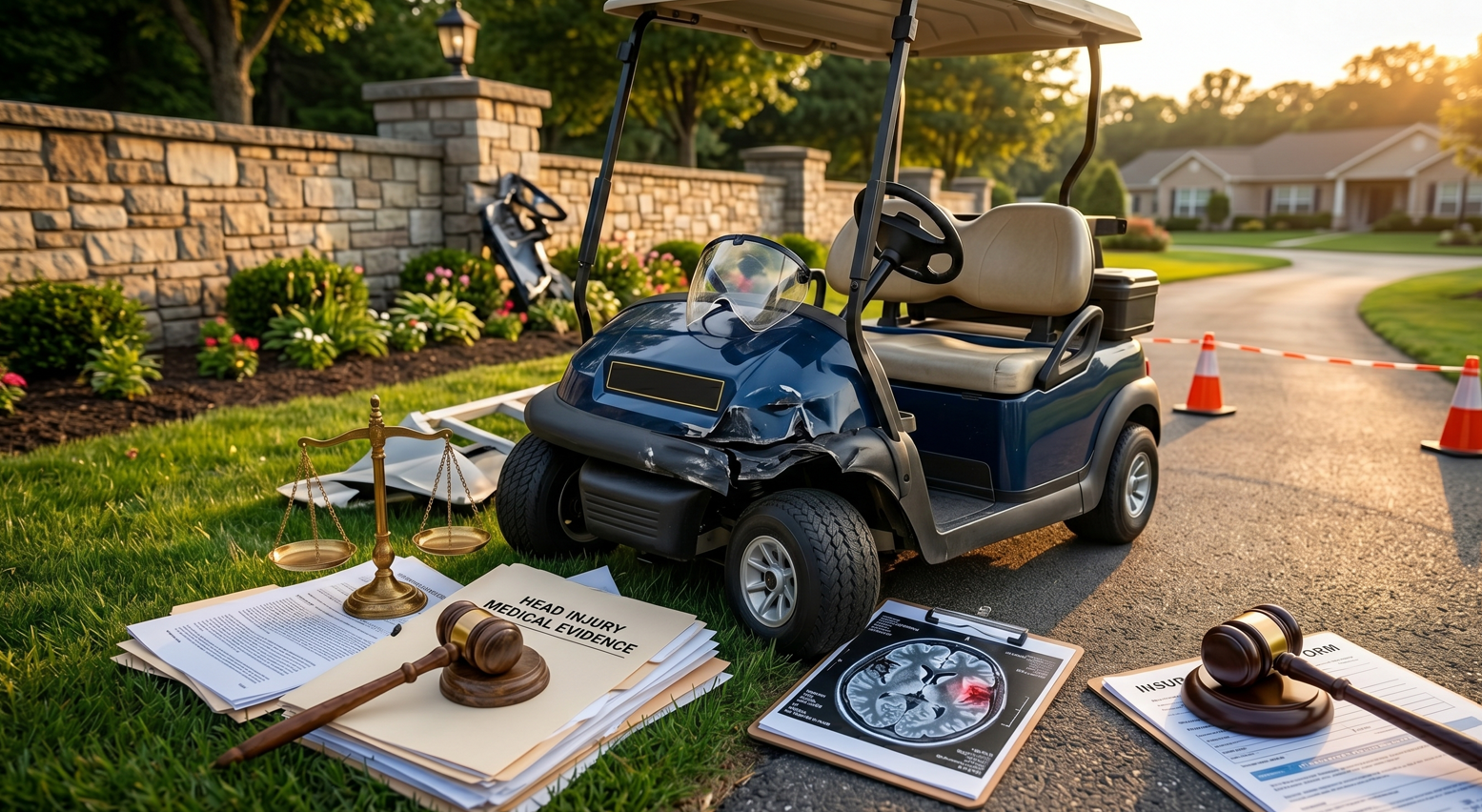
Recovering After a Golf Cart Accident Head Injury Claim
Golf carts are no longer just for the back nine. From retirement communities and beach towns to large estates, these “low-speed vehicles” (LSVs) have become a staple of modern convenience. However, their open-air design and lack of traditional safety features like airbags or steel frames mean that even a minor tip-over can lead to a major medical crisis.
If you or a loved one are navigating a golf cart accident head injury claim, you are likely dealing with more than just paperwork. You are dealing with a life-interrupted. This guide breaks down the legal, medical, and financial steps to ensure you get the justice and recovery you deserve.
Why Head Injuries in Golf Carts Are Unique
Most people view golf carts as glorified lawnmowers, but the law and physics says otherwise. In states like Florida, golf carts are legally classified as “dangerous instrumentalities.” This means they are capable of causing serious harm, and the legal standards for operating them are higher than you might think.
The Physics of the Fall
Because most golf carts lack doors or seatbelts, the primary mechanism of injury is ejection. When a cart takes a sharp turn at 15 mph, centrifugal force can easily toss a passenger onto the pavement. Unlike a car accident where a frame protects you, in a golf cart, your head often becomes the first point of impact with the ground.
Common Types of Injuries Reported
According to recent data from the National Institutes of Health (NIH), nearly 70% of golf cart-related hospitalizations involve head or neck trauma. Common diagnoses include:
-
Concussions: Mild Traumatic Brain Injuries (mTBIs) that still require months of rest.
-
Skull Fractures: Often occurring in rollover accidents.
-
Intracranial Hemorrhage: Internal bleeding that may not show symptoms for hours but can be fatal.
-
Diffuse Axonal Injury: Tearing of the brain’s connecting nerve fibers, often leading to long-term cognitive changes.
Determining Liability: Who Is at Fault?
To win a claim, you must prove negligence. This basically means someone failed to act with “reasonable care.” In golf cart cases, the “who” can be surprising.
1. The Driver
If the driver was speeding, distracted by a phone, or driving under the influence (yes, DUIs apply to golf carts), they are primarily liable.
2. The Owner
Under the “Dangerous Instrumentality Doctrine,” the owner of the cart can be held liable for an accident even if they weren’t driving it. This is crucial if the driver doesn’t have sufficient insurance.
3. The Manufacturer
Was there a mechanical failure? If the brakes locked up or the steering snapped due to a design flaw, you might have a product liability claim against the manufacturer.
4. The Property Owner
If the accident happened due to a hidden pothole, a lack of signage, or a dangerously designed path on a golf course or within an HOA, the property manager may share the blame.
Step-by-Step Guide to Protecting Your Claim
If you have suffered a head injury, your brain is currently your most important piece of evidence. Here is how to protect your health and your legal rights simultaneously.
Step 1: Seek “Invisible” Medical Help
Head injuries are “invisible” because you can’t see a brain bleed from the outside. Never say “I’m fine” at the scene. Adrenaline masks pain. Go to an ER or Urgent Care immediately and mention any dizziness, light sensitivity, or confusion.
Step 2: Document the “Why”
If you are able, take photos of the cart’s position, the tire marks on the grass, and any obstacles. If the cart has a “modified” speed controller (making it go faster than the legal 20 mph limit), this is a massive piece of evidence.
Step 3: Identify Witnesses
Golf course staff or neighbors usually see these accidents happen. Get their names and numbers. Their unbiased testimony is often the “smoking gun” in a settlement.
Step 4: The “Pain Journal”
Insurance companies hate “Pain and Suffering” claims because they are hard to quantify. Start a daily log. Note when you have a headache, when you couldn’t drive, or when you missed a family event. This transforms a vague “it hurts” into a documented medical history.Calculating the Value of Your Claim
There is no “magic calculator” for a head injury, but attorneys generally use two methods to reach a settlement figure.
| Category | What it Covers | Examples |
| Economic Damages | Verifiable financial losses | ER bills, surgery, lost wages, future rehab |
| Non-Economic | The human cost of the injury | Pain, anxiety, loss of enjoyment of life |
| Punitive Damages | Punishment for extreme malice | Drunk driving or intentional “horseplay” |
The Multiplier Method: Most insurers take your total medical bills (e.g., $20,000) and multiply them by a factor of 1.5 to 5 depending on the severity of the head injury to calculate pain and suffering.
Dealing with Insurance (The “No-Fault” Trap)
Here is a pro tip: Your standard auto insurance might not cover a golf cart accident.
-
PIP (Personal Injury Protection): In many states, PIP doesn’t apply to golf carts unless they are registered as Low-Speed Vehicles (LSVs) with a license plate.
-
Homeowners Insurance: Sometimes, your homeowners’ policy covers “off-road” accidents, but many have exclusions for accidents occurring on public roads.
-
The Adjuster’s Tactic: If an insurance adjuster calls you two days after the accident offering a “quick $5,000,” do not sign. Brain injuries can take weeks to fully manifest. Once you sign a release, you cannot ask for more money later.
Expert Tips for a Successful Recovery
-
Follow the Treatment Plan: If your doctor says “no screens for a week” to heal a concussion, follow it. If you are caught on social media or working, the insurance company will argue you weren’t actually injured.
-
Check for Recalls: The Consumer Product Safety Commission (CPSC) frequently issues recalls for golf cart steering and braking systems. A quick search of your cart’s VIN could change your entire case.
-
Beware of Social Media: Don’t post photos of your recovery or the accident. Defense attorneys love to find a photo of you smiling at a birthday party to “prove” your head injury isn’t that bad.
Final Thoughts
A golf cart accident head injury claim is a marathon, not a sprint. Because the brain is so complex, these cases often take longer to settle as lawyers wait for a “Maximum Medical Improvement” (MMI) rating from your doctors. This ensures that any permanent damage is factored into your final payout.
Did this guide help you understand your rights? Share this article with someone who lives in a golf cart community it might save them a lot of legal heartache later!
If you have questions or want to share your experience with a golf cart claim, leave a comment below.
