
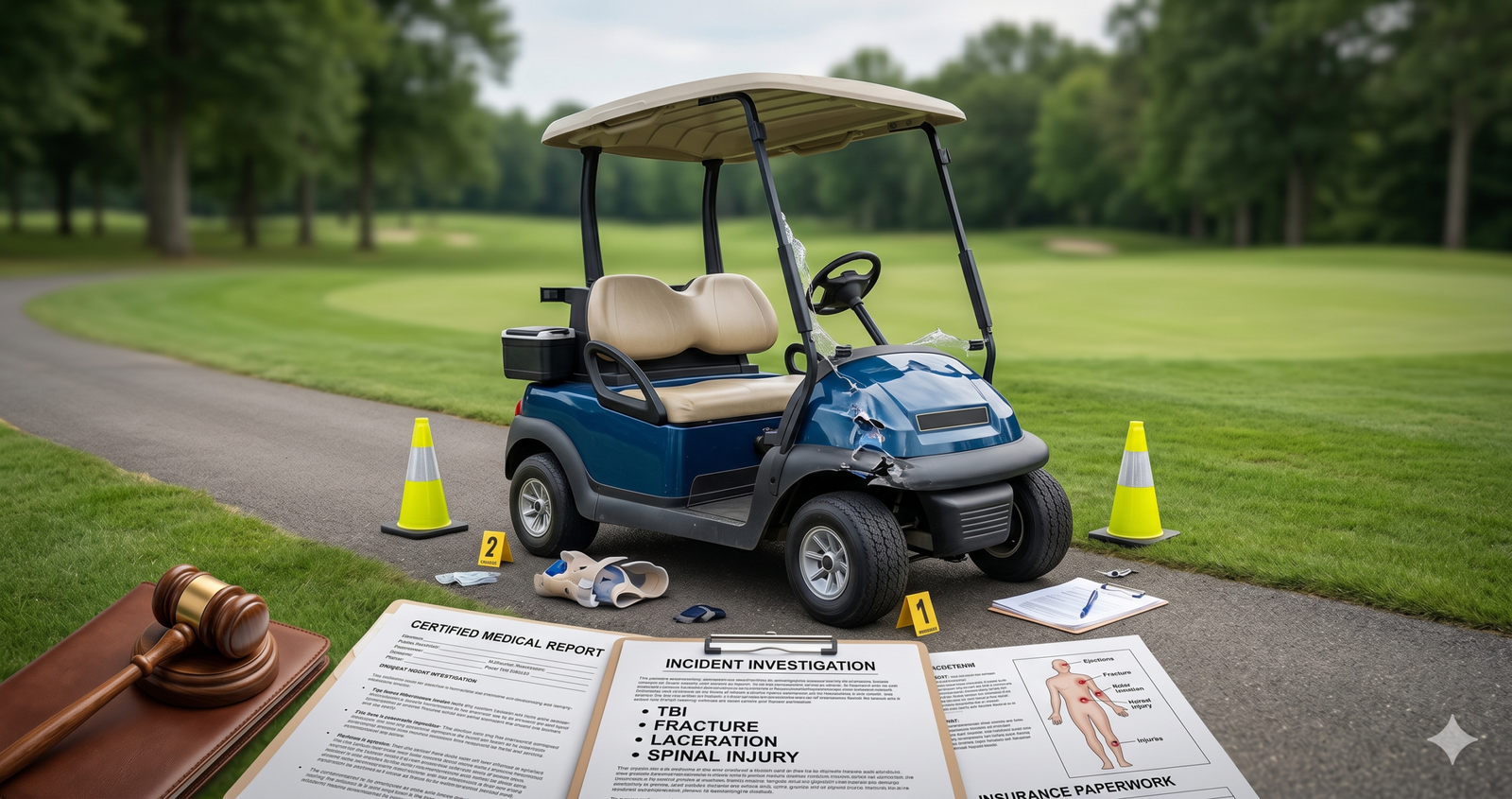
Many people view golf carts as harmless recreational tools, but these open-air vehicles can be surprisingly dangerous. Every year, approximately 15,000 individuals in the United States visit emergency rooms due to golf cart-related incidents. Because most carts lack the safety infrastructure of standard automobiles—such as airbags, doors, or mandatory seatbelts—even a low-speed crash or sharp turn can lead to devastating physical consequences.
This guide explores the most frequent injuries associated with golf cart accidents, the risks for specific age groups, and essential safety tips to keep your next ride on the fairways incident-free.
1. Traumatic Brain and Head Injuries
Head trauma is among the most severe consequences of a golf cart accident. Studies show that over 11% of all golf cart injuries involve the head or neck.
-
Concussions: These frequently occur when a passenger is jolted or ejected from the vehicle, causing the brain to strike the inside of the skull.
-
Skull Fractures: In serious collisions or rollovers, the force of impact against the ground or the cart’s frame can result in severe trauma.
-
Intracranial Hematomas: Internal bleeding can happen if the head strikes a hard surface during an ejection.
2. Bone Fractures and Orthopedic Trauma
Without doors or side panels to keep occupants inside, passengers are often flung from the cart during a collision or an abrupt turn.
-
Limb Fractures: Broken arms, legs, and collarbones are common as victims instinctively reach out to break their fall.
-
Pelvic and Shoulder Injuries: The impact of hitting the pavement or being pinned under a rolling cart often results in fractures to the trunk and shoulders.
-
Spinal Cord Injuries: Sudden ejections can cause serious damage to the spinal cord, potentially leading to long-term mobility issues.
3. Soft Tissue and Superficial Damage
Soft tissue injuries are the most common type of trauma, affecting nearly 48% of all patients treated for golf cart accidents.
-
Lacerations and Abrasions: “Road rash” and deep cuts are frequent when occupants slide across pavement or gravel after being ejected.
-
Contusions: Severe bruising can occur from striking the steering wheel, roof supports, or the dashboard during a sudden stop.
-
Sprains and Strains: Sudden movements during a rollover often lead to ligament damage.
4. Why Are Children and Seniors at Higher Risk?
Data indicates that the risk of injury is not distributed equally across all age groups.
| Risk Group | Key Statistic | Primary Injury Risk |
| Children (<16) | Account for 31.2% of all injuries | Children are over 3x more likely to suffer traumatic brain injuries than adults. |
| Seniors (80+) | High injury rates due to retirement community use | Seniors are particularly vulnerable to serious brain trauma. |
5. Major Causes of Golf Cart Injuries
Understanding how these accidents happen is the first step toward prevention.
-
Passenger Ejection: Nearly 38% of injuries are caused by someone falling or jumping from a moving cart.
-
Rollovers: Carts are top-heavy with a narrow wheelbase, making them prone to tipping over during sharp turns, especially at high speeds.
-
Alcohol Use: Alcohol is a major contributor to accidents, as drivers often underestimate the skill required to operate these vehicles safely.
-
Mixed Road Use: Collisions with larger vehicles on public streets significantly increase the risk of severe trauma.
6. Practical Safety Checklist for Operators
Following basic safety protocols can reduce the likelihood of a trip to the emergency room.
-
Install and Wear Seatbelts: Although not standard on all models, seatbelts are the most effective way to prevent ejections.
-
Control Your Speed: Never cart recklessly and always slow down before making turns to prevent the cart from capsizing.
-
Observe Passenger Limits: Never overcrowd a cart with more people than it is designed for.
-
Avoid Distractions: Do not use phones, text, or engage in horseplay while driving.
-
Regular Maintenance: Inspect tires and brakes regularly to ensure the vehicle is in safe operating condition.
Protecting Your Legal Rights
If you or a loved one has been injured in a golf cart accident, determining liability is essential. Depending on the circumstances, responsibility may lie with a reckless driver, a property owner who failed to maintain safe pathways, or even a manufacturer if a mechanical defect caused the crash.
Victims may be entitled to recover damages for medical expenses, lost wages, and pain and suffering. Because statutes of limitations apply such as Florida’s two-year limit for personal injury it is vital to document the scene and consult with a legal professional promptly.
Have you ever witnessed or been in a golf cart accident? Share this article to help spread safety awareness, and comment below with your own tips for staying safe on the cart path!
