
Golf carts look harmless. They putter along at 15–20 mph, often driven by retirees in polo shirts or teenagers cutting across a resort property. But do not let the slow speed fool you golf cart accidents can cause serious injuries, legal complications, and financial headaches if you do not handle the aftermath correctly.
According to the U.S. Consumer Product Safety Commission (CPSC), more than 15,000 golf cart-related injuries are treated in emergency rooms across the United States every year. That number has been climbing steadily as golf carts appear more frequently on private roads, retirement communities, college campuses, and tourist destinations not just golf courses.
So whether you were the driver, a passenger, or a bystander who got hit, this guide walks you through exactly what to do after a golf cart accident calmly, clearly, and step by step.
Stay Calm and Assess the Situation First
The first few minutes after any accident feel chaotic. Your adrenaline spikes, your hands might shake, and your brain wants to process ten things at once.
Stop. Breathe. Assess.
Before anything else, check yourself and anyone nearby for injuries. Do not try to move anyone who may have a neck or spinal injury this is critical. Moving an injured person incorrectly can turn a manageable injury into a permanent one.
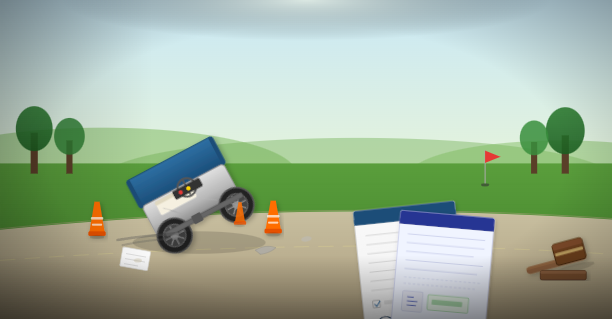
If the cart has tipped over (which happens more often than people expect, especially on slopes or sharp turns), make sure no one is pinned underneath it.
Call Emergency Services Immediately If Needed
If anyone is injured even mildly call 911 right away. Do not downplay it. Do not say “it’s probably fine.” Golf cart accidents have caused traumatic brain injuries, broken bones, spinal damage, and in rare cases, fatalities.
Even if the injuries seem minor at first, always get medical evaluation. Some injuries, like internal bleeding or concussions, do not show obvious symptoms right away.
When calling emergency services, tell them:
- Your exact location (golf course name, resort address, street name, GPS coordinates if available)
- Number of people involved
- Any visible serious injuries
- Whether the cart has overturned
Do Not Leave the Scene
This might seem obvious, but people sometimes panic and leave — especially if they were driving recklessly or under the influence. Leaving the scene of an accident, even in a golf cart, can carry serious legal consequences depending on your state or country.
Stay at the scene. Cooperate with emergency personnel and any investigating officers.
Document Everything Like a Detective
Once everyone is safe and emergency services have been contacted, start collecting evidence. This step is incredibly important if you ever need to file an insurance claim or pursue legal action.
What to Document
Photos and videos: Take pictures of the golf cart from multiple angles, the surrounding area, any visible injuries, tire marks, damaged property, and anything else that might be relevant. If the cart flipped, photograph how it landed and the terrain.
Personal information: Exchange names, contact details, and insurance information with all parties involved — just as you would in a car accident. If the accident occurred on a golf course or private property, get the name of the facility manager or owner.
Witness information: If anyone saw what happened, ask for their name and phone number. Witness statements can be invaluable later.
Incident report: If you are on a golf course, resort, or any managed property, ask management to file an official incident report. Request a copy for your records.
Seek Medical Attention Even If You Feel Fine
This deserves its own section because so many people skip this step and regret it later.
After a golf cart accident, get a medical evaluation within 24 hours, even if you feel “okay.” Common delayed-onset injuries include:
- Whiplash — neck pain that worsens 24 to 48 hours after impact
- Concussions — you may feel fine initially but experience symptoms hours or days later
- Soft tissue injuries — sprains and strains that become more painful as inflammation sets in
- Internal injuries — these are silent and potentially life-threatening
From a legal and insurance standpoint, seeing a doctor creates an official medical record that links your injuries to the accident. Without this documentation, proving your injury claim becomes significantly harder.
Report the Accident to the Right Authorities
Depending on where the accident occurred, you may need to report it to different entities.
On a Golf Course or Private Property
Report the incident directly to course management. They should document it in their incident log. This record may be critical if liability questions arise later.
On a Public Road or Path
In many U.S. states and municipalities, golf carts are legally allowed on certain public roads. If the accident happened on a public road, file a police report. Contact your local law enforcement non-emergency line if no officers responded to the scene.
In a Gated Community or HOA Area
Contact the homeowners association or community management office. They often have their own protocols for accidents involving community vehicles.
Notify Your Insurance Company
Contact your insurance provider as soon as possible — ideally within 24 hours of the accident.
Golf cart insurance is a bit of a gray area. Standard homeowner’s insurance policies sometimes cover golf carts used on your own property, but coverage often does not extend to public roads or golf courses. Some auto insurance policies may provide limited coverage depending on how the cart was being used.
If you own a golf cart, it is worth having a dedicated golf cart insurance policy that covers liability, collision, and medical payments. If you did not have one before this accident, consider getting one after.
When talking to your insurance company:
- Stick to the facts. Do not speculate about fault.
- Share your documentation and photos.
- Ask specifically what your policy covers in this situation.
- Keep a record of everyone you speak with, including names, dates, and what was discussed.
Understand Who May Be Liable
Golf cart accident liability can be more complicated than it first appears. Multiple parties could potentially share responsibility depending on the circumstances.
Potential Liable Parties
The driver: If the driver was negligent (speeding, distracted, driving under the influence, or operating the cart improperly), they bear primary responsibility.
The property owner: If the accident occurred on a golf course, resort, or other managed property, the owner may be liable if the terrain was unsafe, signage was inadequate, or the cart was poorly maintained.
The cart manufacturer: If a mechanical defect caused or contributed to the accident — faulty brakes, a steering issue, or a battery malfunction — the manufacturer could be held liable under product liability law.
The cart rental company: If you rented the cart and it was in poor condition, the rental company may share responsibility.
This is why documentation is so important. The more evidence you have, the clearer the picture of what actually happened and who is responsible for it.
Consider Consulting a Personal Injury Attorney
If anyone was injured in the accident including yourself it is worth at least a consultation with a personal injury attorney. Most offer free initial consultations.
An attorney can help you understand your rights, determine who is at fault, deal with insurance companies on your behalf, and pursue compensation if you were injured due to someone else’s negligence.
This is especially important if your injuries are serious, if the liable party denies responsibility, or if the insurance settlement offered seems unfairly low.
Look for an attorney who has experience with premises liability or vehicle accident cases. The American Bar Association’s website (americanbar.org) has a lawyer referral tool that can help you find qualified legal professionals in your area.
Tips to Prevent Golf Cart Accidents in the Future
Since we are here, let us talk prevention. Most golf cart accidents are completely avoidable.
Key Safety Tips
Never overload the cart. Golf carts are designed for a specific number of passengers. Overloading shifts the center of gravity and increases rollover risk significantly.
Slow down on slopes and turns. Golf carts have a high center of gravity compared to standard vehicles. A sharp turn at even 15 mph can cause a tip-over.
Do not let inexperienced or underage drivers operate the cart. In most U.S. states, you must be at least 16 years old to operate a golf cart on public roads. On private property, rules vary — but unsupervised young drivers are a leading cause of golf cart accidents.
Keep hands, feet, and limbs inside the cart. Sounds basic, but golf cart injuries frequently involve passengers dangling feet off the side of moving carts.
Avoid driving on wet or uneven terrain unless the cart is specifically designed for it.
Do not drink and drive yes, this applies to golf carts too. In many states, DUI laws apply to golf carts operated on public roads.
Quick Reference Checklist After a Golf Cart Accident
Here is a fast summary you can save or share:
- Stay calm and check for injuries
- Call 911 if anyone is hurt
- Do not leave the scene
- Photograph everything cart, location, injuries, damage
- Exchange contact and insurance information
- Get witness names and phone numbers
- File an incident report with the property owner or management
- See a doctor within 24 hours, even if you feel fine
- Report the accident to police if it occurred on a public road
- Notify your insurance company promptly
- Consult a personal injury attorney if injuries are involved
Final Thoughts
A golf cart accident can go from inconvenient to legally and financially complicated very quickly. The steps you take in the hours immediately after the accident documenting the scene, seeking medical care, notifying the right people can make a significant difference in how things turn out for you.
Do not assume that because it was “just a golf cart” the situation is minor. Treat it with the same seriousness you would a regular vehicle accident. Your health, your finances, and your rights deserve that level of attention.
