

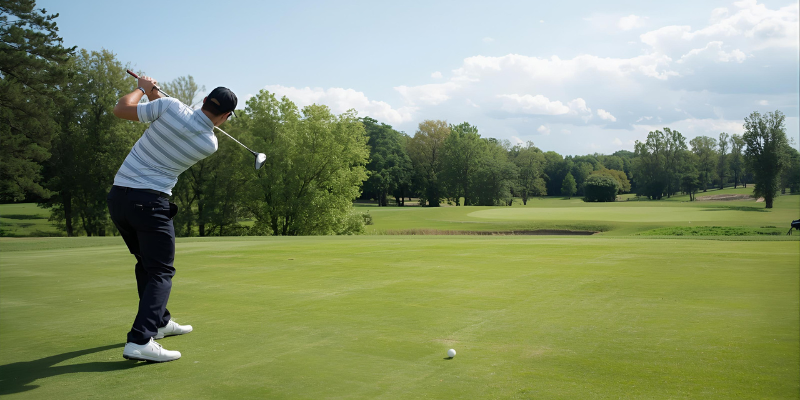
Golf is a sport of precision, strategy, and technique. While skill plays a huge role, the equipment you choose—especially golf clubs—makes a tremendous difference in how you play. Every golf club is designed with a unique purpose, whether it’s driving the ball long distances, hitting accurate approach shots, or sinking putts with finesse.
For beginners, the variety of clubs can be overwhelming. Drivers, woods, irons, wedges, and putters all serve different functions, and within those categories, there are countless variations. For experienced players, knowing which club to use in a given situation is the difference between shooting par and struggling through the course.
This guide covers all the different types of golf clubs, their features, and when to use them, so you can step onto the course with confidence.
The Main Categories of Golf Clubs
Golf clubs fall into five main categories: drivers, woods, irons, wedges, and putters. Each is engineered for specific situations on the course.
Drivers – The Power Club
The driver, often referred to as the 1-wood, is the longest club in a golfer’s bag. It’s designed for maximum distance off the tee.
Features of a Driver
- Largest clubhead of all golf clubs.
- Long shaft for increased swing speed.
- Loft typically between 8 and 13 degrees.
When to Use a Driver
Drivers are almost always used for the first shot on par-4 and par-5 holes, where distance is crucial. Modern drivers are built with forgiving sweet spots to help players maintain accuracy even on off-center hits.
Fairway Woods – Distance with Control
Fairway woods (like the 3-wood and 5-wood) are designed for long-distance shots from the fairway or rough. They offer more loft than drivers, making them easier to hit when the ball isn’t on a tee.
Features of Fairway Woods
- Smaller head than a driver but larger than irons.
- Shafts slightly shorter than drivers for control.
- Lofts ranging from 13 to 21 degrees.
When to Use Fairway Woods
These clubs are ideal for second shots on par-5 holes or long par-4s. They’re also a smart option off the tee for players who struggle to control their driver.
Hybrids – The Best of Both Worlds
Hybrids combine the design of irons and woods, making them versatile clubs for many situations.
Features of Hybrids
- Compact clubhead shaped like a small wood.
- Shorter shaft than a wood but longer than an iron.
- High launch angle for better ball flight.
When to Use Hybrids
Hybrids are excellent replacements for long irons (2, 3, and 4 irons) because they’re easier to hit and more forgiving. They work well from the rough, fairway, or even off the tee.
Irons – The Precision Clubs
Irons are the most common type of golf club. They’re used for a wide range of shots, especially approach shots to the green.
Types of Irons
- Long Irons (2–4 irons): Designed for distance but difficult for many players to hit consistently.
- Mid Irons (5–7 irons): Balance of distance and accuracy, often used for shots from 150–180 yards.
- Short Irons (8–9 irons): High-lofted clubs for approach shots under 150 yards.
Features of Irons
- Thin clubface and angled face (loft).
- Shafts shorter than woods for more control.
- Available in cavity-back (forgiveness) or blade (precision) designs.
When to Use Irons
Irons are used on almost every hole, making them essential. Whether hitting from the fairway, rough, or fringe of the green, irons deliver accuracy and control.
Wedges – The Scoring Clubs
Wedges are specialized irons with higher lofts, designed for short-distance shots and accuracy near the green.
Types of Wedges
- Pitching Wedge (PW): 44–48 degrees loft, used for approach shots and short chips.
- Gap Wedge (GW): 50–54 degrees loft, fills the distance gap between pitching and sand wedges.
- Sand Wedge (SW): 54–58 degrees loft, perfect for bunker shots and soft landings.
- Lob Wedge (LW): 58–64 degrees loft, used for high, short shots that stop quickly.
When to Use Wedges
Wedges are crucial for short-game control. They allow you to escape sand traps, chip around the green, or hit precise approach shots that stick close to the pin.
Putters – The Finishing Touch
The putter is the most used club in the bag. It’s designed specifically for rolling the ball smoothly on the green.
Types of Putters
- Blade Putters: Traditional style with a slim head, preferred by purists.
- Mallet Putters: Larger head, offering more forgiveness and stability.
- Counterbalanced Putters: Heavier, designed to improve consistency in long putts.
When to Use Putters
Putters are only used on the green or fringe, but mastering this club is essential since putting often makes up half of your strokes in a round.
Factors That Differentiate Golf Clubs
Golf clubs aren’t just categorized by type—they also vary in materials, shaft design, and flex, all of which affect performance.
- Clubhead Material: Titanium, stainless steel, or composite designs affect weight and forgiveness.
- Shaft Length: Longer shafts provide more distance but less control.
- Shaft Flex: Stiff, regular, or senior flex options match swing speed and player strength.
- Loft and Lie Angle: Determine trajectory and accuracy.
Building a Golf Club Set
A complete golf set usually includes:
- Driver (1)
- Fairway Woods (1–2)
- Hybrids (1–2)
- Irons (6–7)
- Wedges (2–4)
- Putter (1)
Golfers are allowed to carry up to 14 clubs in a round, so customizing your set for your style of play is important. Beginners often benefit from more hybrids and cavity-back irons, while advanced players may prefer blades and specialized wedges.
Conclusion
Understanding the different types of golf clubs is key to improving your game. From the power of the driver to the precision of wedges and the reliability of the putter, every club has a role. Building the right set for your skill level and style ensures confidence on every shot, whether you’re teeing off, hitting an approach, or sinking the final putt.
For expert advice on choosing the right golf clubs and customizing your set, contact us today for personalized guidance.
FAQs
How many types of golf clubs are there?
There are five main types: drivers, woods, hybrids, irons, wedges, and putters.
What clubs should a beginner carry?
A beginner set often includes a driver, a 3-wood or hybrid, a few irons, a pitching wedge, and a putter.
Which club hits the farthest?
The driver is designed for maximum distance, typically used off the tee.
What is the easiest golf club to hit?
Hybrids and cavity-back irons are generally the most forgiving for beginners.
Do professional golfers use all 14 clubs?
Yes, most pros use a full set, but they carefully select each club to suit their playing style and course conditions.
